




 ARTOAJ Home



Abstract
The agricultural sector’s vulnerability to climate change, declining soil fertility, market fluctuations, and limited access to credit drives many smallholder maize farmers to engage in non-farm activities for economic stability. However, the extent to which diversification improves welfare remains underexplored. This study investigated the impact of livelihood diversification on the welfare of maize farming households in Nigeria. Data from the General Household Survey (2018/2019) was used. Data on 875 maize farming households were extracted for the study. Descriptive statistics, consumption expenditure approach, Simpson’s index, Tobit regression, and propensity score matching were employed for analysis. Results showed that 83.54% of household heads were male, with a mean age of 49.76 years. About 49.14% of households diversified, with an average diversification index of 0.3. The mean per capita expenditure was ₦16,367.4, and 88.34% of households had good welfare. Diversified households engaged in trading (34.31%), non-agricultural businesses (32.02%), and transportation (15.58%). Access to credit, household size, education, and monthly income positively influenced diversification. Livelihood diversification improved the welfare of the maize farming households. Diversified households had an average increase of ₦744.43 in per capita expenditure. The study recommends promoting access to credit through a well-managed cooperative society to strengthen rural financial institutions and microcredit schemes. This will empower maize farmers to invest in alternative income-generating activities, thereby enhancing their capacity to diversify and improve welfare..
Keywords: Livelihood diversification; household welfare; consumption expenditure; Simpson’s index
Introduction
Agriculture remains a cornerstone of Nigeria’s economy, accounting for approximately 25% of the Gross Domestic Product (GDP) and serving as the main source of livelihood for over 70% of its population [1]. The sector encompasses diverse activities, including crop production, livestock farming, forestry, and fisheries, with crop production as the dominant subsector. Maize, in particular, stands out as one of the most cultivated crops due to its versatility as food, feed, and industrial raw material. Its high nutritional value and adaptability across diverse agroecological zones in Nigeria make it indispensable for both smallholder farmers and agribusiness enterprises Food and Agriculture Organisation [2].
Despite its significance, maize farming in Nigeria faces multiple challenges, including declining soil fertility, erratic rainfall patterns linked to climate change, pest infestations, herders’ conflicts, and limited access to modern farming technologies. Smallholder farmers, who account for the bulk of maize production, often lack the resources and infrastructure needed to achieve optimal yields [3].
Most smallholder maize farmers continue to rely on traditional or old varieties of maize rather than adopting improved ones. These old varieties are often favoured due to their familiarity, perceived resilience to local conditions, and the lack of resources required for transitioning to improved seed varieties. However, these traditional varieties are typically low-yielding, more susceptible to pests and diseases, and less adaptive to changing climatic conditions compared to improved varieties [4]. Maize productivity in Nigeria remains below its potential, with average yields stagnating at approximately 1.8-2.2 tons per hectare, far lower than the achievable yield of 5-7 tons per hectare with improved technologies [2]. The low levels of productivity can be linked to several factors, such as the adoption of outdated agricultural techniques, dependence on traditional maize varieties, restricted availability of quality inputs, deficient soil fertility, and insufficient irrigation facilities [3]. Market price fluctuations and the persistent threat of insecurity in rural areas exacerbate the vulnerabilities of these farmers, thereby affecting their productivity and welfare [5]. The low productivity and economic hardships faced by maize farmers in Nigeria have far-reaching consequences on their welfare, contributing to widespread hunger, negative health outcomes, and restricted educational opportunities. With maize serving as both a staple food and a cash crop, fluctuations in yield often lead to severe food shortages at the household level, forcing families to adopt coping strategies such as reducing meal portions or consuming less nutritious food [2].
According to Osagie et al. [6], farmers are looking for different options beyond just farming income to alleviate poverty. The agricultural sector presents various risks and uncertainties that can result in financial hardship, poor living conditions, and decreased food security for families engaged in farming. These challenges faced by farmers have led them to seek out various income sources and consider alternative means of livelihood. Supporting this viewpoint, Akaakohol et al. [7] pointed out that the majority of farmers are smallholders functioning at a subsistence level. They frequently find it challenging to achieve satisfactory financial returns from their crops due to factors such as insufficient storage facilities, inadequate road infrastructure, subpar processing methods, ineffective government policies, and natural disasters like floods and droughts. Consequently, many farming households look for additional income through off-farm activities. This suggests that utilising off-farm options could offer a practical means for rural individuals to break free from poverty.
Livelihood diversification has emerged as a critical strategy for addressing these challenges. By participating in various income- generating endeavours in addition to maize farming, families can lessen their dependence on agriculture and improve their economic stability. Diversification strategies include integrating other crops, rearing livestock, engaging in trading or handicrafts, and seeking off-farm employment opportunities [8,9]. Several reasons have been adduced for maize farmers’ diversification; according to Siaw et al. [10] and Seppelt et al. [11], maize farming is seasonal and often subject to price fluctuations, pest infestations, and variable yields. They affirmed that farmers diversify to reduce the risk of total income loss due to crop failure, disease outbreaks, or market shocks. Ma et al. [12] affirmed that diversification into non-farm activities or other crops increases household income and consumption stability. Proximity to towns and access to roads increase opportunities in petty trading, artisanship, transport services, etc. Skill acquisition or empowerment initiatives encourage farmers to engage in new ventures [13,14]. In Nigeria, where rural poverty remains widespread and agriculture is vulnerable to environmental and economic shocks, livelihood diversification is increasingly seen as a pathway to sustainable development. However, the degree to which diversification enhances welfare is influenced by elements like resource availability, education, infrastructure, and institutional backing [15].
Nigeria’s agro-industrial sector relies heavily on maize production (poultry, brewery, baby food and pharmaceuticals), but farmers confront many obstacles, including climate variability [16], deteriorating soil fertility, market price fluctuations, and restricted access to agricultural inputs and credit constraints [17]. These issues contribute to rural poverty, food insecurity, and limited economic growth among farming households. In response, many farmers support their incomes by engaging in non-agricultural endeavours like trading, skilled labour, and paid employment. However, the effectiveness of these strategies in improving the welfare of maize farmers remains underexplored. Although a few studies have examined the impact of diversification on household income [18-23], most research has focused on the broader challenges faced by rural farmers and the advantages of livelihood diversification [24]. Despite the growing trend of diversification among maize farmers, there is limited empirical evidence on how such strategies affect the overall welfare of farming households in Nigeria. It remains unclear whether livelihood diversification serves as a pathway out of poverty or if it merely reflects the coping strategies of vulnerable households. Without clear insights into this relationship, policymakers and development practitioners may struggle to design effective interventions that enhance rural livelihoods and agricultural productivity. Therefore, this study seeks to investigate the impact of livelihood diversification on the welfare of maize farming households in Nigeria, providing evidence- based recommendations for poverty reduction, agricultural development, and rural economic resilience. The study focuses on understanding how diversification strategies influence key welfare metrics, providing valuable insights to inform policies aimed at promoting sustainable development and improving the living conditions of maize farmers. Moreover, the study aligns with the United Nations Sustainable Development Goals (SDGs). By identifying effective livelihood diversification strategies, the study contributes to SDG 1 (No Poverty) and SDG 2 (Zero Hunger), which promote income stability and food security among maize farmers. To achieve the objective of the study, the following research questions are raised:
i. What is the extent of livelihood diversification of maize
farmers in Nigeria?
ii. What is the welfare status of maize farmers in Nigeria?
iii. What factors influence diversification among maize
farmers?
iv. Does livelihood diversification affect the welfare of
maize farmers?
Theoretical framework and literature review
The theoretical framework of this study is based on the Sustainable Livelihood Framework (SLF) and the Risk Management and Coping Theory. The SLF emphasises the role of various assets- human, social, natural, physical, and financial capital-in shaping livelihood strategies [25,26]. It explains how farmers diversify to improve resilience and welfare by engaging in off-farm activities [27,28]. The Risk Management and Coping Theory highlights how households anticipate and respond to risks such as climate change and market fluctuations by diversifying income sources [29,30]. Farmers use both proactive risk management (diversification) and reactive coping strategies (savings or borrowing) to maintain economic stability [31,32].
Literature reveals that household welfare can be measured using three approaches: household income, household expenditure and asset-based wealth index. Ahmed et al. [33] affirmed that household income is hard to measure in less-developed countries, as much of it comes from self-employment. According to Getahun and Villanger [34], data on household income are likely to be understated compared to consumption expenditures. For instance, households may not remember everything they have sold or money they have earned within a year. They may also be unwilling to reveal their entire income for fear of taxation [35]. The growing importance of household assets as indicators of household well-being in emerging nations is consistent with the use of an asset-based approach to welfare measurement [36-38]. However, one major challenge faced in empirical research involving asset-based methods is the significant disparity in asset ownership among households [39]. This study adopted a household consumption expenditure approach to household welfare. According to Balisacan et al. [40], household consumption expenditure closely relates to long-term average well-being, making it an excellent proxy for welfare. The advantage of utilising consumer expenditure as a proxy for household welfare is that it can provide a steadier and accurate picture than income alone by reflecting a household’s actual resource use and long-term living standards [41].
Some of the methods used in studies to measure the extent of livelihood diversification include Shannon [42-44] and Simpson [45,46]. Herfindahl-Hirschman Index [47,48] lacks value-validity property [49]. The study utilised the Shannon index. Unlike other methods for measuring livelihood diversification, the Simpson index captures the degree of diversification among households by examining the number of earning sources and their distribution among those sources [50].
Several methods [Randomized Controlled Trials (RCTs): Emerick et al. [51]; Magezi and Nakano [52]; Propensity Score Matching:, Oladimeji et al. [53]; Sowunmi et al. [54]; Adebayo et al. [55]; Tagel and van der, [56]; Shehu and Sidique [57]; Regression discontinuity: MacPherson and Sterck [58]; Casaburi et al. [59]; Difference in difference, Kondylis and Loeser [60]; Fallah et al. [61]; Chagas et al. [62]: Endogenous switching regression: Auci and Pronti [63]; Fitawek and Hendriks [64]; Adela and Aurbacher [65]; Ahmed et al. [33] have been used in literature to measure impact in agriculture and related fields. Despite the strengths of RCTs in establishing causality, they also have notable limitations. Conducting RCTs in agricultural settings can be expensive and time-consuming; ethical concerns also arise when withholding potentially beneficial interventions from control groups. Moreover, RCTs may suffer from attrition bias if participants drop out of the study over time, leading to incomplete data and potential distortions in the estimated impact. According to Moss and Yeaton [66], the regression discontinuity design utilises data that might otherwise be disregarded. The estimated effects of RD design are only unbiased if the functional form of the relationship between the treatment and outcome is correctly modelled. According to Columbia University [67], the difference-in-differences (DiD) method has limitations, including the need for similar treatment and control groups, the assumption of parallel trends, potential bias from unobserved confounding factors, and difficulties in identifying causal effects when treatment effects are heterogeneous [67]. Models with endogenous switching can be estimated with one equation at a time, either by two-step least squares or maximum likelihood estimation, which are inefficient [68].
This study utilised Propensity Score Matching. Propensity Score Matching contributes to the more precise estimation of treatment response [69]. When randomisation is not practical, propensity score matching reduces bias in observational research by forming groups with comparable observed features, enabling more reliable causal inference [70].
Analytical framework of Propensity score estimation
Following Rosenbaum and Rubin [71], Shenyang et al. [72], Austin [73] and Umeokeke et al. [74], the mean effect of livelihood diversification on the population of maize farming households will be estimated and the propensity score computed using probit regression models given as follows:

Where D = (0, 1) is the indicator of exposure to treatment characteristics (dependent variable). That is, D = 1 if exposed to treatment, and D = 0 if not exposed. X is a multidimensional vector of observed characteristics, also known as explanatory variables. These are the variables that are expected to jointly determine the likelihood of involvement in the treatment and the outcome. The matched sample is used to compute the average treatment effect on the treated. It is estimated as follows:


Where D = 1 denotes diversified maize farming households (treatment), and X is a set of conditioning variables on which the subjects will be matched. Is the mean of the counterfactual and denotes what the outcome would have been among diversified maize farming households had they not been included in the sample [72].
The following formulae are used to estimate the mean effect of the treatment based on the mean difference in the outcomes of the matched pairs:


The ATE is the average effect, at the population level, of moving an entire population from untreated to treated. A related measure of treatment effect is the average treatment effect for the treated [75]. The ATT is the average effect of treatment on those subjects who ultimately received the treatment.
Methodology
Study area
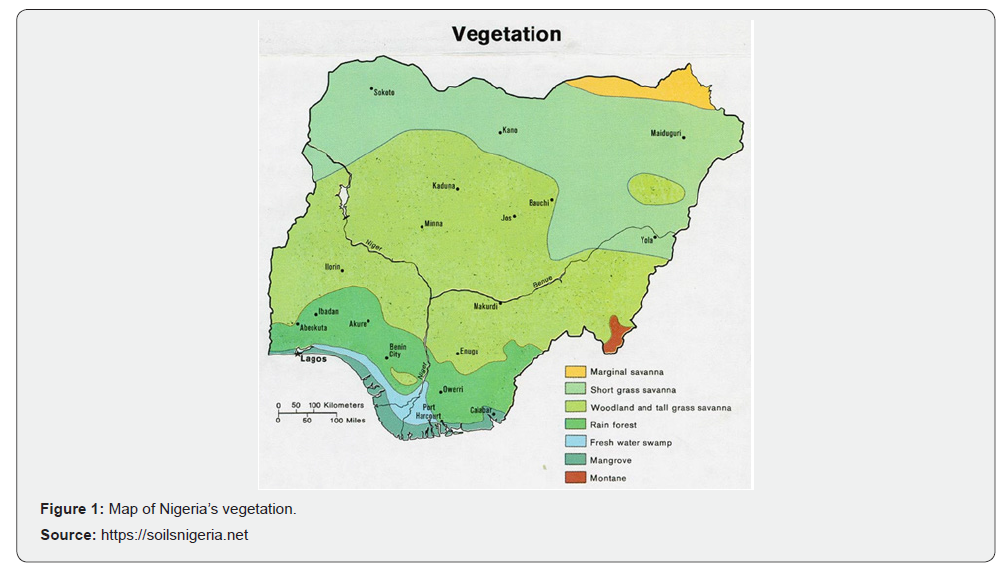
The study was conducted in Nigeria. It is one of the Sub-Saharan African countries located in West Africa that borders the Republic of Benin to the West, Cameroon and Chad to the East, and Niger to the North. It lies between longitudes 40 and 140 North. Nigeria has a landmass of 923,768 sq. km and a population above 211 million (World Bank, 2021). Nigeria is made up of 36 states and the Federal Capital Territory (FCT). It is grouped into six geopolitical zones: North-Central, North-East, North-West, South- East, South-South and South-West. The country’s agroecological zones include the Sahel (marginal) savanna, Sudan savanna, Guinea savanna, derived savanna, montane and rainforest zones, each characterised by variations in rainfall, temperature, and soil types [76]. Among these zones, the Guinea Savanna stands out as the most suitable for maize production due to its favourable climate and soil conditions (Figure 1). It receives annual rainfall ranging from 900 mm to 1500 mm and experiences warm temperatures between 21°C and 32 °C, which are ideal for maize cultivation. Additionally, the zone’s well-drained loamy soils support optimal root development and nutrient uptake, leading to high yields. States within the Guinea Savanna, such as Kaduna, Niger, Benue, and Kwara, are major maize-producing regions in Nigeria [77]. Compared to the humid Rainforest zone, the Guinea Savanna also experiences lower pest and disease pressure, further enhancing maize productivity [78].
Data type and source
This study used a secondary data set from the General Household Survey (GHS) 2018/2019, jointly collected by the National Bureau of Statistics (NBS) and the World Bank. The final cleaned sample consisted of 875 maize farming households extracted from the dataset. The data included information on socioeconomic characteristics such as age, sex, educational level, household size, marital status, credit access, monthly income, access to extension services, and farm size, as well as household food and non-food expenditures.
Analytical techniques
The study employed descriptive statistics to summarise the data, Simpson’s Index of Diversity to measure the extent of livelihood diversification, consumption expenditure analysis to assess welfare status, Tobit regression to examine factors influencing diversification, and Propensity Score Matching (PSM) to analyse the effect of livelihood diversification on welfare. The poverty threshold was set at two-thirds of the mean per capita household expenditure (MPCHE) to classify households as poor or non-poor.
Variables utilised
The study includes both dependent and independent variables to assess the impact of livelihood diversification on the welfare of maize farming households in Nigeria. The dependent variables include the livelihood diversification index and welfare status. The livelihood diversification index is measured using Simpson’s Index of Diversity (SID), which quantifies the extent to which households engage in multiple income-generating activities. A higher SID value indicates greater diversification. Welfare status is measured using per capita consumption expenditure, which includes both food and non-food household expenditures. Households are classified as poor or non-poor based on a poverty threshold, defined as twothirds of the mean per capita household expenditure (MPCHE).
The independent variables are the socioeconomic and farm-related factors. The sex of the household head is a categorical variable measured as 1 for males and 0 for females. The age of the household head is a continuous variable measured in years. Marital status is categorical, coded as 1 for married and 0 otherwise. Educational level is a continuous variable representing the number of years of formal schooling. Household size is measured as a continuous variable based on the total number of members in the household. Farm size is a continuous variable measured in hectares. Access to credit is categorical, with 1 indicating access and 0 indicating no access. Similarly, access to extension services is measured as a categorical variable, where 1 indicates access and 0 indicates no access. Monthly income is a continuous variable measured in Nigerian Naira (₦), representing total earnings. Finally, the number of income sources is a continuous variable reflecting the total number of different livelihood activities the household is engaged in.
Empirical model
Descriptive statistics like frequency distribution, percentage and mean were used to profile the socio-economic characteristics of the maize farmers. Simpon’s livelihood diversification Index was used to measure the diversity of strategies adopted by households in the study area. The formula for the Simpson index is in equation 7:

The welfare status of maize farmers in the study area was assessed using their consumption expenditure. Total Consumption Expenditure=Food Consumption Expenditure + Non-Food Consumption Expenditure
Construction of poverty line: Two-thirds of the Mean Per Capita Household Expenditure (MPCHE) (see eq. 9) was used as the poverty line. The category of the poverty line is given as:
i. Poor: Those spending less than 2/3 of the MPCHE
ii. Non-poor: Those spending more than 2/3 of the MPCHE.


Tobit Regression was utilised to determine the factors affecting household choices to diversify their livelihoods within the study region. The Tobit model used in this analysis was structured as shown in equation (10):

Where Y represents the Livelihood diversification index, X1 represents the age of the household head (years), X2 represents the marital status of the household head (Married 1, 0 if otherwise), X3 represents the educational level of the household head, X4 represents total monthly income (₦), X5 represents the sex of the household head (Male= 1, Female=0), X6 represents access to credit facility (No=0, Yes=1), X7 represents farm size (Hectares), X8 represents household size, X9 represents access to extension services (No = 0, Yes =1), β1 to β9 represents regression parameters or coefficient, μi represents error term
Propensity Score Matching (PSM) approach
PSM was used to determine the impact of livelihood diversification on the welfare of maize farming households by employing the Average Treatment Effect (ATE) population parameter. The propensity score is defined as the conditional probability of receiving a treatment given the treatment characteristics (Lee, 2008). In the first step in PSM analysis, the propensity score was obtained from probit regression for each maize farming household that diversified and for farming households that did not diversify on the basis of observed household characteristics. The second step is to compare the MPCE of the diversified households with that of the matched or similar non-diversified households (those with similar propensity scores). According to Austin (2011), by establishing groups with comparable baseline characteristics, propensity score estimation aims to reduce bias in treatment effect estimation by simulating a randomised controlled trial (RCT) in observational studies. The PSM approach was used to adjust for self-selection bias. By matching each unique user observation with an observation from a group of non-diversified households that share similar features, PSM creates a statistical comparison group (Moyorga and Cartagena-Farias, 2017).
Following Kantar [79] and Kissell [80], probit regression was employed to estimate limited dependent variables. Probit regression is a standard model applicable when the dependent variable is binary. It incorporates normal distribution and differs only in the assumed distribution of the error term and is, in practice, virtually equivalent. The probit regression is given as:

Where Y=1 for diversified maize farming households, Y=0 for maize farming households with no diversification, X1 represents sex (Male=1, Female=0), X2 represents age, (years), X3 represents the household size, X4 represents access to credit, (No = 0, Yes = 1), X5 represents access to extension service, (No =0, Yes=1), X6 represents farm size (hectares), X7 represents the level of education, X8 represents number of income sources; X9 represents educational level and the alphas (∝K) and error term (u) are parameters to be estimated.
Results and Discussion
Respondent’s diversification status by socioeconomic characteristics
Table 1 highlights the distribution of respondents’ diversification status across socioeconomic characteristics such as sex, age, and household size. Regarding sex, males dominate both diversified (88.14%) and non-diversified (79.10%) groups, suggesting they have greater access to opportunities for livelihood diversification. In contrast, females are more represented in the non-diversified group (20.90%), likely due to barriers such as limited access to resources, cultural norms, or household responsibilities. For age, the largest proportion of diversified respondents falls within the 39-48 years category (25.35%), followed closely by those aged 29-38 years (22.79%) and 49-58 years (22.33%). This trend reflects the active economic participation of middle-aged individuals. Younger respondents (19-28 years) account for only 4.88% of the diversified group, likely due to limited capital or experience, while older individuals above 68 years (10.00%) are less involved, possibly due to physical limitations or retirement. For household size, most diversified respondents belong to households with 15 members (45.58%), followed by 6-10 members (41.86%). Larger households (11+ members) are less likely to diversify, possibly due to resource constraints. These results suggest the need for targeted interventions to address gender disparities, empower youth with resources and skills, and provide support to larger households to overcome resource limitations. This aligns with Adepoju and Obayelu [81] and Barrett et al. [82].

Source: Author’s Computation (2025).
Distribution of respondents’ other economic activities
The results in table 2 reveals respondents who engaged in other activities asides maize farming showed that about 11.62% are involved in processing of any crop or livestock, 34.41% were involved in trading, 7.44% were involved in service, 3.48% were involved in professional office job, 15.58% are involved in transportation and 4.41% owned a bar, restaurant or a food stand.

Source: Author’s Computation (2025).
Extent of livelihood diversification among respondents
Table 3 presents the extent of livelihood diversification among maize farming households using the Simpson Index of Diversity. The results show that 50.86% of households did not diversify. That is, the households relied entirely on income from maize farming, making them highly vulnerable to economic shocks such as price fluctuations, climate risks, and market failures. With more than 80% of Nigerian farmers engaging in smallholder farming [83], which is prone to climate shocks and the menace of cattle invasion, the importance of diversifying livelihoods to prevent asset depletion and alleviate poverty levels cannot be overemphasised. Households relying solely on maize farming can lead to increased vulnerability to climate shocks, food insecurity, and poverty, as well as limited opportunities for income and asset accumulation [84-86].
Also, 26.17% fall into the less diversified category, indicating some level of additional income sources, but are still heavily dependent on maize farming and other crops. Meanwhile, 22.97% of households were moderately diversified. This indicates the household’s engagement in supplementary economic activities such as trading or livestock farming, which may provide some financial stability. However, no household falls into the highly diversified category, revealing a lack of an extensive livelihood diversification strategy among farmers. This suggests structural barriers such as limited access to capital, poor market integration, and weak rural infrastructure, which restrict diversification opportunities. The mean value of 0.30 indicates an overall low level of livelihood diversification. This is concerning as diversification is widely recognised as a strategy for improving rural welfare by spreading income risks and enhancing economic resilience. The categorisation used aligns with previous studies, such as Werdofa et al. [87], which highlight similar SID breakpoints in rural livelihood research.

Source: Author’s Computation (2025).
Determination of welfare status among the respondents
Table 4 reveals that a significant majority of the respondents (88.34%) are classified as non-poor, while only 11.66% of the respondents fall into the poor category. This distribution suggests that most households in the survey are above the poverty line and have relatively better access to resources, income, or consumption to meet their basic needs. The poverty line for this survey is set at ₦10,913.4. Any respondent with a monthly consumption expenditure below ₦10,913.4 would be considered poor, while those above this threshold are classified as non-poor. Given that only 11.66% of respondents fall below the poverty line, the poverty rate is relatively low, indicating a higher proportion of households are meeting or exceeding their basic consumption needs. The average monthly per capita consumption expenditure is ₦16,367.4, which is well above the poverty line of ₦10,913.4. This suggests that, on average, the households have adequate resources to meet their basic needs, with a substantial margin above the defined poverty line. It supports the finding that most respondents are non-poor based on their expenditure.

Source: Author’s Computation (2025).
Factors influencing livelihood diversification of maize farming households
The log-likelihood of 400.09544 shows a reasonable fit. The LR chi2 statistic of 39.71, with a p-value of 0.0000, confirms that the independent variables significantly explain livelihood diversification. The results of the analysis on factors influencing diversification by maize farmers reveal that various factors significantly affect their likelihood of diversifying their income sources. Age, for instance, negatively influenced livelihood diversification, with older farmers less likely to diversify compared to younger ones. This is likely due to older farmers being more set in traditional farming practices, which can limit their openness to new strategies. Similarly, farm size also appears to have a slightly negative effect on diversification, suggesting that larger farms may reduce the need for diversification since they can generate stable income from maize farming alone. This is consistent with Olaniyi (2020), who noted that larger farms might rely less on diversification due to their higher agricultural productivity.. On the other hand, factors such as household size, educational level, Number of income sources, access to credit, and monthly income all have a positive and significant impact on diversification. Larger households, for example, have more labour available, enabling them to engage in multiple activities and diversify their income. Additionally, higher education levels are associated with a greater likelihood of adopting new farming practices and technologies, which can contribute to diversification. The number of income sources is another key factor, with farmers who already have multiple income streams being more likely to diversify further. Access to credit and higher monthly income also provide the necessary financial resources to support diversification initiatives. Interestingly, marital status and gender were found to have little to no significant impact on diversification. These findings suggest that gender and marital status are not major determinants of livelihood diversification among maize farmers in this context. These findings align with previous studies. Olayemi (2020) found that higher income is associated with a greater ability to diversify agricultural and nonagricultural activities.

A*** p<.01, ** p<.05, * p<.1
Source: Author’s Computation (2025).
Impact of livelihood diversification on the welfare status of the respondent
The diagnostic results of the probit regression confirm that the model is statistically significant, as indicated by the Likelihood Ratio (LR) Chi² value of 52.21 (p = 0.0000). This suggests that the included variables collectively explain variations in livelihood diversification among maize farming households. However, the Pseudo R² value of 0.043 (4.3%) indicates that the model captures some influencing factors. Age has a negative effect, where a one-year increase in age slightly reduces the probability of diversification, suggesting that younger farmers are more likely to diversify, as older individuals may face physical or cognitive barriers, also noted by Zhou et al. (2024), who found that ageing limits the household capacity for diversified livelihoods. Household size has a positive and significant effect, with each additional household member increasing the likelihood of diversification, indicating that larger households may seek additional income sources to meet financial needs. Education level also positively influences diversification, as an additional year of schooling increases the chances of diversification. This suggests that more educated farmers have better access to information and opportunities for alternative livelihoods. The number of income sources has the strongest effect, increasing diversification chances, and showing that farmers with multiple income streams are more financially stable and entrepreneurial [82].
Access to credit is a significant and positive determinant of diversification, corroborating findings by Asfaw et al. [88], which highlighted that credit is essential for enabling rural households to invest in nonfarm activities, emphasising the role of financial resources in enabling farmers to explore alternative income-generating activities. However, factors such as sex, marital status, farm size, and access to extension services do not significantly affect diversification, implying that other structural and economic factors may be at play, consistent with Charoenkittayawut et al. [89], who argued that socioeconomic contexts, rather than gender, are more critical for livelihood decisions.

Source: Author’s Computation (2025).
Propensity score
Table 7 presents the propensity score estimates, indicating that, on average, the likelihood of maize farmers engaging in other income-generating activities is 49% among the total sample of maize farmers. This means that if one maize farmer were randomly selected from the group of 875 maize farmers, there is a 49% probability that the farmer would diversify to boost their per capita consumption expenditure.

Source: Author’s Computation (2025).
Treatment effect estimation
Table 8 presents the results from the propensity score matching analysis, which indicates the impact of treatment on per capita expenditure (PCE), which serves as a proxy for welfare. In the unmatched sample, the treated group (maize farmers who diversify) has an average PCE of 2236.53, while the control group (maize farmers who did not diversify) has an average PCE of 1438.10, resulting in a raw difference of 798.43 with a standard error of 360.91. This raw difference reflects disparities between the groups before accounting for covariates, highlighting the need for matching to control for selection bias. After matching, the ATT (Average Treatment Effect on the Treated) shows that the treated group has an average PCE of 2244.92, while the matched control group has an average PCE of 1500.49, resulting in a difference of 744.43 with a standard error of 385.50. This indicates that treatment increases PCE by 744.43 among those who received it. The ATU (Average Treatment Effect on the Untreated) reveals that untreated households have an average PCE of 1439.58, but their predicted average PCE would rise to 2774.87 if they were treated, with a difference of 1335.29. This highlights the potential for greater welfare improvements among untreated households if they gain access to treatment. The ATE (Average Treatment Effect) across the entire sample, which includes both treated and untreated groups, is 1047.58, representing the overall expected increase in PCE if all households were treated. The findings suggest that the treatment intervention significantly improves welfare among treated households. This underscores the importance of expanding access to the treatment to maximise overall welfare outcomes. This result aligns with Abebe et al. [90] and Sisay [91] that livelihood diversification positively improves the welfare of the farmers.
Propensity score and common support for propensity score estimation
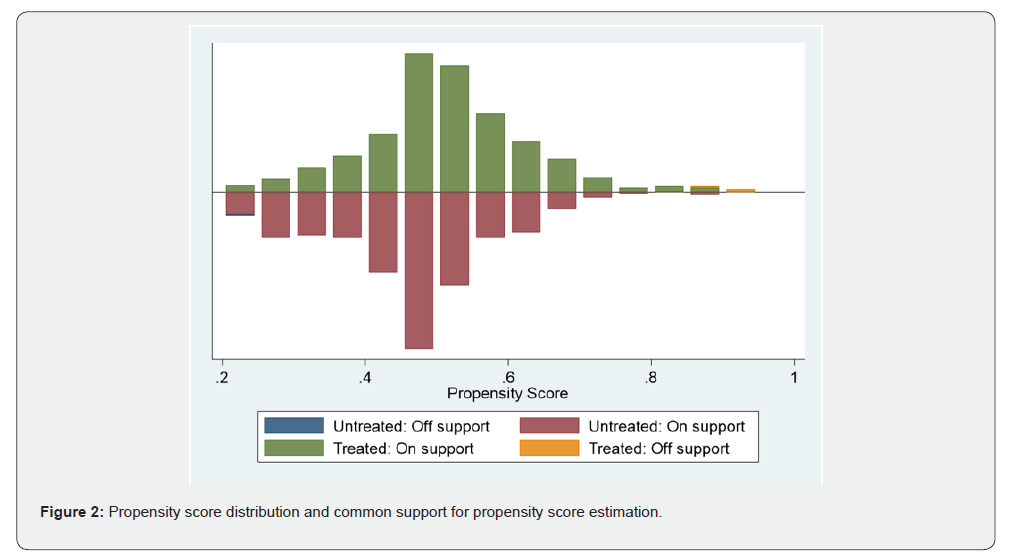
Figure 2 illustrates the overlap in propensity scores between the treated and control groups. A greater degree of overlap indicates a strong match between the treated and control groups. The figure reveals a significant overlap in propensity scores between maize farmers who diversify (treated group) and those who do not (control group), suggesting that the matching is well-balanced and satisfies the common support condition. The upper section of the graph represents the propensity score distribution for the treated group (diversified farmers), while the lower section displays the distribution for the control group (non-diversified farmers). Additionally, the figure indicates that only a small number of respondents fall outside the region of common support [92-95].

Source: Author’s Computation (2025).
Conclusion and Recommendations
This study assessed the impact of livelihood diversification on the welfare of maize farming households in Nigeria. Age, household size, education level, number of income sources, and access to credit influenced the household’s likelihood to diversify. Notably, younger, larger, and more educated households with better access to credit and multiple income streams are more inclined to diversify their livelihoods. Furthermore, the study revealed that livelihood diversification has a positive impact on the welfare of maize farming households, as measured by per capita expenditure (PCE). The diversified households experienced a welfare gain of ₦744.43, while the non-diversified maize farming households could potentially gain ₦1,335.29 if they chose to diversify. Trading, other non-agricultural businesses, transportation and processing of agricultural products (in descending order) were the most preferred diversified economic activities by the respondents. These findings underscore the pivotal role of livelihood diversification in improving household welfare and the need to address structural barriers preventing its adoption, particularly among older and resource-constrained farmers. The study recommends that access to credit should be promoted through well-managed cooperative societies to strengthen rural financial institutions and microcredit schemes. This will empower maize farmers to invest in alternative income-generating activities, thereby enhancing their capacity to diversify and improve welfare. Moreover, given the positive influence of education on diversification, policies that improve access to formal education and vocational training through specialised NGOs will equip farmers with the skills and knowledge needed to explore and manage diversified livelihoods. The need for the Federal Ministry of Agriculture in collaboration with NGOs, to come up with programmes aimed at enhancing diversification among younger farmers and households with larger family sizes, who are more likely to pursue multiple income sources to meet growing needs, is also recommended [95-99].
Limitations of the Study
Despite the valuable insights generated from this study, several limitations should be acknowledged, which may affect the interpretation and generalizability of the findings:
i. The use of secondary data (the 2018/2019 General Household Survey (GHS) dataset), which, while nationally representative, limited the inclusion of some important variables. Qualitative factors such as farmers’ perception of risk, cultural preferences, and social capital, known to influence diversification decisions, could not be adequately captured.
ii. The data collection was cross-sectional, which constrains the ability to capture dynamic changes over time or establish causal inferences beyond statistical associations. Livelihood diversification and welfare outcomes are inherently dynamic processes influenced by seasonal and macroeconomic conditions.
iii. Welfare in this study was measured using per capita consumption expenditure. While this is a widely accepted proxy for welfare, it does not fully capture multidimensional aspects such as health status, education, or subjective well-being, which may also be affected by livelihood diversification.
iv. Despite the use of Propensity Score Matching (PSM) to reduce selection bias, unobserved characteristics (e.g., motivation, risk tolerance, entrepreneurial ability) may still influence both the decision to diversify and welfare outcomes, potentially biasing the results.
Future Research Directions
In light of the above limitations, future research can take several directions to deepen understanding and guide effective policy formulation:
i. Future studies should utilise panel data to better capture the temporal dynamics of livelihood strategies and welfare outcomes. This will enable analysis of how shocks (e.g., climate change, market volatility) or policy interventions influence diversification behaviour and household resilience over time.
ii. Future research should adopt a multidimensional welfare framework that includes indicators such as nutrition, education, health, and housing quality. This would provide a more holistic understanding of how livelihood diversification affects rural wellbeing.
Practical Significance
i. Policy Guidance for Rural Development and Poverty Reduction:
• The study provides evidence that livelihood diversification positively impacts household welfare. With the Average Treatment Effect (ATE) showing a notable increase in per capita expenditure among diversified households, policymakers are equipped with strong empirical justification to promote diversification schemes as a tool for rural poverty alleviation.
• The finding that non-diversified households could benefit even more if treated (ATU = ₦1,335.29 gain) emphasises the untapped potential for improving welfare through targeted interventions.
ii. Targeted Agricultural Extension and Credit Services:
• The study identifies key socioeconomic drivers of diversification, such as education, household size, income, and access to credit, which allows development agencies and government programs to target support where it’s most likely to facilitate diversification.
• Since access to credit and extension services significantly influences diversification, practical interventions could include microfinance programs, farmer cooperatives, and training schemes that ease constraints to entering non-farm enterprises.
iii. Mitigation of Climate and Economic Shocks:
• The low level of livelihood diversification among maize farmers (mean SID = 0.30) signals high vulnerability to climate variability, market shocks, and price fluctuations. The study stresses the urgent need to reduce reliance on maize farming alone, particularly given the increasing climate-induced risks in Sub-Saharan Africa.
• Encouraging diversification into off-farm and non-farm activities offers a resilience-building strategy for farming households.
iv. Empirical Basis for Development Projects:
• NGOs, donor agencies, and agricultural development programs can use this study’s PSM-based findings to design and evaluate livelihood projects, simulate welfare outcomes, and set benchmarks for expected welfare improvements from diversification efforts.
Theoretical Significance
i. Validation of Livelihood Diversification Theories:
• The study supports existing livelihood theories, such as the Sustainable Livelihood Framework (SLF), by empirically confirming that asset access (credit, education, household labour) enables diversification, which in turn enhances welfare.
• It contributes to rural livelihood literature by linking the multidimensional concept of livelihood diversification to tangible welfare outcomes using robust econometric techniques.
ii. Methodological Contribution:
• The use of Simpson’s Index of Diversity, Tobit regression, and Propensity Score Matching (PSM) represents a rigorous empirical approach to analyse both the drivers and effects of diversification.
• The application of PSM provides a quasi-experimental design that controls for selection bias, enhancing the causal interpretation of the relationship between diversification and welfare.
iii. Context-Specific Evidence from West Africa:
• This study adds geographically contextualised evidence to a growing body of literature on African agricultural transformation, especially by focusing on the Guinea Savanna agroecological zone, a key maize-producing region in Nigeria.
• It reinforces the need to tailor livelihood strategies to local agroecological, socioeconomic, and institutional realities.
References
- Nigeria Bureau of Statistics (2023). Nigerian Gross Domestic Product Report.
- Food and Agriculture Organisation (2023) Food and Agriculture Organisation of the United Nations. Food and Agriculture Organisation of the United Nations.
- Shehu A, Sidique SF (2021) A Propensity Score Matching Analysis of the Impact of Participation in Nonfarm Enterprise Activities on Household Wellbeing in Rural Nigeria. UMK Procedia 1: 26-32.
- Kamara A, Kamai N, Omoigui L, Togola A, Ekeleme F, (n.d.). Transforming African Agriculture: feed the future Nigeria integrated agriculture activity Guide to Maize Production in Northern Nigeria.
- Harvey CA, Rakotobe ZL, Rao NS, Dave R, Razafimahatratra H, et al. (2014) Extreme vulnerability of smallholder farmers to agricultural risks and climate change in Madagascar. Philosophical Transactions of the Royal Society B: Biological Sciences 369(1639): 20130089.
- Osagie JA, Afolami CA, Balogun OL (2020) Effect of livelihood diversification and technology adoption on food security status of rice farming households in Ogun State. NIGERIA. Agricultural Social Economic Journal 20(3): 233-244.
- Akaakohol MA, and Aye GC (2014) Diversification and farm household welfare in Makurdi, Benue State, Nigeria. Development Studies Research 1(1): 168-175.
- World Bank report (2022) Poverty and Shared Prosperity 2022. World Bank Publications.
- Tesfamicheal W, Abebe M, Alene AD, Tahirou A, Ajala SO, et al. (2023) Drivers of transformation of the maize sector in Nigeria. Global Food Security 38: 100713-100713.
- Siaw VF, Osae M, Larbi JA, Baidoo PK, Osei MA (2024) Incidence, prevalence and severity of fall armyworm infestation in Ghana: a case of two maize enclaves in the Ashanti Region of Ghana. Cogent Food and Agriculture 10(1).
- Seppelt R, Klotz S, Peiter E, Volk M (2022) Agriculture and food security under a changing climate: An underestimated challenge. IScience 25(12): 105551.
- Ma W, Vatsa P, Zheng H, Rahut DB (2022) Nonfarm employment and consumption diversification in rural China. Economic Analysis and Policy 76: 582-598.
- Rural Asset Finance (2024) Farm Diversification Explained.
- National Farmers Union Mutual Insurance Society (2025) Farm Diversification Ideas.
- Abo-Khalil AG (2024) Integrating Sustainability into Higher Education: Challenges and Opportunities for Universities Worldwide. Heliyon 10(9): e29946-e29946.
- Coster AS, Adeoti AI (2024) Economic Effects of Climate Change on Maize Production and Farmers’ Adaptation Strategies in Nigeria: A Ricardian Approach. Journal of Agricultural Science, 7(5).
- Bello M, Nazifi B (2023) Unlocking maize potential: Efficiency and constraints.Analysis among sole grown and intercrop farmers in Bebeji Local Government Area of Kano State. Journal of Agriculture and Environment 19(1): 35-52.
- Leyaro V, Hongoli J (2024) Income Diversification and Household Welfare in Tanzania 1991 - 2018: Evidence from a Synthetic Panel.
- Koiry S, Kairi B, Pooja P (2024) Impact of income diversification on multidimensional poverty: Household level evidence from tea estates in Bangladesh. Heliyon 10(5): e26509-e26509.
- Kimkong H, Promphakping B, Hudson H, Samantha CJ, Long L (2023) Income Diversification and Household Wellbeing: Case Study of the Rural Framing Communities of Tang Krasang and Trapang Trabek in Stung Chreybak, Kampong Chhnang, Cambodia. Sustainability 15(14): 11106-11106.
- Chukwu NO, Chukwu JO (2023) Drivers of Households’ off-the-farm Income Diversification Patterns in Nigeria: Panel Evidence Using General Household Survey Data. Review of Development and Change 28(1): 67-89.
- Dedehouanou SFA, and McPeak J (2019) Diversify More or Less? Household Income Generation Strategies and Food Security in Rural Nigeria. The Journal of Development Studies 56(3): 560-577.
- Akinrinde AF, Omotesho KF, and Ogulande I (2018) The issue of income diversification among rural farming households: empirical evidence from Kwara State, Nigeria. Journal of Agribusiness and Rural Development 49(3): 231-238.
- Etuk EA, Udoe PO, Okon II (2019) Determinants of livelihood diversification among farm households in Akamkpa Local Government Area, Cross River State, Nigeria. Agrosearch 18(2): 99.
- Chambers R, Conway GR (1992) Sustainable rural livelihoods: practical concepts for the 21st Brighton, England.
- Ellis F (2006) Agrarian change and rising vulnerability in rural sub-Saharan Africa. New Political Economy 11(3): 387-397.
- Scoones I (1998) Sustainable Rural Livelihoods: A Framework for Analysis. Institute of Development Studies Working Paper 72, IDS, Brighton.
- Bebbington A (1999) Capitals and Capabilities: A Framework for Analysing Peasant Viability, Rural Livelihoods and Poverty. World Development 27(12): 2021-2044.
- Dercon S (2002) Income Risk, Coping Strategies, and Safety Nets. The World Bank Research Observer 17(2): 141-166.
- Adger WN (2009) Social Capital, Collective Action, and Adaptation to Climate Change. Economic Geography 79(4): 387-404.
- Ellis F (2008) The Determinants of Rural Livelihood Diversification in Developing Countries. Journal of Agricultural Economics 51(2): 289-302.
- Moser CON (1998) The asset vulnerability framework: Reassessing urban poverty reduction strategies. World Development 26(1): 1-19.
- Ahmed MH, Geleta KM, Tazeze A and Andualem E (2017) The Impact of improved maize varieties on farm productivity and wellbeing: Evidence from the East Hararghe zone of Ethiopia. Development Studies Research 4(1): 9-21.
- Getahun TD, Villanger E (2015) Labour-intensive jobs for women and development: Intrahousehold welfare effects and their transmission channels (No. 15). CMI (Chr. Michelsen Institute). Bergen: Norway.
- Meyer BD, Sullivan JX (2003) Measuring the Well-Being of the Poor Using Income and Consumption. The Journal of Human Resources 38: 1180.
- Brockington D, Coast E, Mdee A, Howland O, and Randall S (2019) Assets and domestic units: methodological challenges for longitudinal studies of poverty dynamics. The Journal of Peasant Studies 48(1): 159-179.
- Vandemoortele M (2013) Measuring Household Wealth with Latent Trait Modelling: An Application to Malawian DHS Data. Social Indicators Research 118(2): 877-891.
- Filmer D, Scott K (2011) Assessing Asset Indices. Demography 49(1): 359-392.
- Abebayehu GG (2023) Agricultural productivity, land use intensification and rural household welfare: evidence from Ethiopia. Agrekon 62(3): 309-327.
- Balisacan AM, Pernia EM, and Asra A (2003) Revisiting growth and poverty reduction in Indonesia: what do subnational data show? Bulletin of Indonesian Economic Studies 39(3): 329-351.
- Blundell R, and Preston I (1996) Income, Expenditure and the Living Standards of UK Households. Fiscal Studies 16(3): 40-54.
- Ojo OA, Olarinoye EB, Ojo MA (2024) Effects of livelihood diversification on poverty status of rural farming households of Kwara State, Nigeria. Journal of Agriculture and Rural Development in the Tropics and Subtropics 125(2): 185-195.
- Sabyrbekov R (2019) Income diversification strategies among pastoralists in Central Asia: Findings from Kyrgyzstan. Pastoralism 9(1).
- Jin S, Waibel H Min S, Huang J (2018) Livelihood responses of smallholder farmers in Southwest China to the decline in rubber prices. 2018 Conference, Vancouver, British Columbia.
- Alemu FM (2023) Measuring the intensity of rural livelihood diversification strategies, and its impacts on rural households’ welfare: Evidence from South Gondar zone, Amahara Regional State, Ethiopia. MethodsX 10: 102191.
- Habib N, Rankin P, Alauddin M, Cramb R (2022) Determinants of livelihood diversification in rural rain-fed region of Pakistan: evidence from fractional multinomial logit (FMLOGIT) estimation. Environmental Science and Pollution Research 30(5): 13185-13196.
- Adebayo K, Lamboll R and Westby A (2009) Social implications of the development of cassava postharvest systems in Africa. Expert Consultation at the Natural Resource Institute. University of Greenwich, United Kingdom.
- Babatunde RO and Qaim M (2009) Patterns of income diversification in rural Nigeria: Determinants and impacts. Quarterly Journal of International Agriculture 48(4): 305-320.
- Kvålseth TO (2020) Cautionary Note about the Herfindahl-Hirschman Index of Market (Industry) Concentration.
- Archibald B, Asuming-Brempong S, and Onumah EE (2014) Determinants of Income Diversification of Farm Households in the Western Region of Ghana. Quarterly Journal of International Agriculture 53(1): 55-72.
- Emerick K, de Janvry A, Sadoulet E, Dar MH (2016) Technological Innovations, Downside Risk, and the Modernisation of Agriculture. American Economic Review 106(6): 1537-1561.
- Nakano Y, Magezi EF (2020) The impact of microcredit on agricultural technology adoption and productivity: Evidence from a randomised control trial in Tanzania. World Development, 133: 104997.
- Oladimeji YU, Tahirou A, Usman HA, Egwuma H, Kadjo Didier Kadjo KD, et al. (2022) Differentials in Adoption of Maize Seed Varieties and Impact on Farmers' Livelihood in Northern Nigeria. Nigerian Agricultural Journal 53(3): 22-31.
- Sowunmi FA, Bello OF, Obi-Egbedi O (2021) Environmental and Welfare Effects of Livelihood Diversification on Charcoal Producers in Oke-Ogun, Oyo State, Nigeria. Journal of Rural Economics and Development 23(1): 48-68.
- Adebayo O, Olagunju KO, and Ogundipe AA (2016) Impact of Agricultural Innovation on Improved Livelihood and Productivity Outcomes Among Smallholder Farmers in Rural Nigeria. SSRN Electronic Journal.
- Tagel G, van der VA(2015) Estimating the impact of a food security program by propensity-score matching. Journal of Development and Agricultural Economics 7(1): 38-47.
- Shehu A, Sidique SF (2014) A Propensity Score Matching Analysis of the Impact of Participation in Non-farm Enterprise Activities on Household Wellbeing in Rural Nigeria. UMK Procedia 1: 26-32.
- MacPherson C, Sterck O (2021) Empowering refugees through cash and agriculture: A regression discontinuity design. Journal of Development Economics 149: 102614.
- Casaburi L, Glennerster R and Suri T (2012) Rural Roads and Intermediated Trade: Regression Discontinuity Evidence from Sierra Leone. SSRN Electronic Journal.
- Kondylis F, Loeser J (2020) Difference-in-differences in practice: The case of mobile phones and farmers’ productivity. World Bank Blogs.
- Fallah B, Krafft C, Wahba J (2019) The impact of refugees on employment and wages in Jordan. Journal of Development Economics 139: 203-216.
- Chagas A LS, Azzoni CR, and Almeida AN (2016) A spatial difference-in-differences analysis of the impact of sugarcane production on respiratory diseases. Regional Science and Urban Economics 59: 24-36.
- Auci S, and Pronti A (2023) Irrigation technology adaptation for sustainable agriculture: A panel endogenous switching analysis on the Italian farmland productivity. Resource and Energy Economics 74: 101391-101391.
- Fitawek W, Hendriks S (2021) Evaluating the Impact of Large-Scale Agricultural Investments on Household Food Security Using an Endogenous Switching Regression Model. Land 10(3): 323.
- Adela FA, Aurbacher J (2018) Access to irrigation water-poverty nexus: Application of an Endogenous Switching Regression in Ethiopia. 2018 Conference, Vancouver, British Columbia.
- Moss BG, Yeaton WH (2006) Shaping policies related to developmental education: An evaluation using the regression-discontinuity design. Educational Evaluation and Policy Analysis 28: 215-229.
- Columbia University (2022) Difference-in-Difference Estimation | Columbia University Mailman School of Public Health. Www.publichealth.columbia.edu.
- Lokshin M, Sajaia Z (2004) Maximum likelihood estimation of endogenous switching regression models. The Stata Journal 4(3): 282-289.
- Littnerová S, Jarkovský J, Pařenica J, Pavlík T, Špinar J, et al. (2013) Why use propensity score in observational studies? Case study based on data from the Czech clinical database AHEAD 2006-09. Cor et Vasa 55(4): e383-e390.
- Lalani N, Jimenez RB, Yeap B (2020) Understanding Propensity Score Analyses. International Journal of Radiation Oncology*Biology*Physics 107(3): 404-407.
- Rosenbaum PR, Rubin DB (1983) The central role of the propensity score in observational studies for causal effects. Biometrika 70(1): 41-55.
- Shenyang G, Barth B, Gibbons C (2004) Introduction to Propensity Score Matching: A New Device for Program Evaluation. Workshop Presented at the Annual Conference of the Society for Social Work Research, New Orleans.
- Austin PC (2011) An Introduction to Propensity Score Methods for Reducing the Effects of Confounding in Observational Studies. Multivariate Behavioural Research 46(3): 399-424.
- Umeokeke NI, Okoruwa VO, Adeyemo TA (2017) Impact of electronic-wallet system on farmers’ welfare in Oyo State, Nigeria. International Journal of Social Economics 44(4): 474–490.
- Imbens GW (2004) Nonparametric Estimation of Average Treatment Effects Under Exogeneity: A Review. Review of Economics and Statistics 86(1): 4-29.
- Adedibu PA, Opeyemi AA, Lawrence AJ, Paul JI, and Oguntoye E (2022) Savanna Biomes In Nigeria: Indicator Species And Plant Adaptation Strategies.
- Kamara AY, Menkir A, Ajala SO, Kureh I (2005) Performance of Diverse Maize Genotypes under Nitrogen Deficiency in the Northern Guinea Savanna of Nigeria. Experimental Agriculture 41(2): 199-212.
- Badu-Apraku B, and Fakorede MAB (2017) Climatology of Maize in Sub-Saharan Africa. Springer EBooks, p. 11-31.
- Kantar L (2021) Limited Dependent Variables (Logit and Probit Models) and an Application on BIST-100: Logit and Probit Models. Springer EBooks 167-195.
- Kissell RL (2020) Probability Models. Elsevier EBooks, pp. 175-195.
- Adepoju OA, and Obayelu AO (2013) Livelihood diversification and welfare of rural households in Ondo State, Nigeria. Journal of Development and Agricultural Economics 5(12): 482-489.
- Barrett CB, Reardon T, and Webb P (2020) Nonfarm income diversification and household livelihood strategies in rural Africa: concepts, dynamics, and policy implications. Food Policy 26(4): 315-331.
- Anderson J, Marita C, Musiime D and Thiam M (2017) National survey and segmentation of smallholder households in Nigeria: understanding their demand for financial, agricultural and digital solutions. Washington, DC: CGAP.
- Emebet A, and Tadesse S (2022) Livelihood Diversification and Its Impact on Household Food Security among Farming Households in Kalu Wereda, South Wollo, Ethiopia. Journal of Economics and Sustainable Development.
- Getinet B, Lorato T (2020) The role of rural livelihood diversification strategies for household food security in Southern Ethiopia: empirical evidence from Kecha Bira District of Kembata Tembaro Zone. Journal of Financial Economics 8(3): 142-151.
- Ahmed MH, and Melesse KA (2018) Impact of off-farm activities on technical efficiency: Evidence from maize producers of eastern Ethiopia. Agriculture and Food Economics 6 (1): 3.
- Werdofa ZG, Kassahun S, Kassahun G (2024) Household livelihood diversification and its determinant factors in Robe town and its surrounding hinterlands, Bale zone, southeast Ethiopia. Humanities and Social Sciences Communications 11(1).
- Asfaw S, Scognamillo A, Caprera GD, Sitko N, and Ignaciuk A (2019) Heterogeneous impact of livelihood diversification on household welfare: Cross-country evidence from Sub-Saharan Africa. World Development 117: 278-295.
- Charoenkittayawut S, Mankeb P and Suwanmaneepong S (2023) Determinants of income diversification among farm households in Thailand. International Journal of Agricultural Technology 19(3): 909920.
- Abebe T, Chalchisa T, and Eneyew A (2021) The Impact of Rural Livelihood Diversification on Household Poverty: Evidence from Jimma Zone, Oromia National Regional State, Southwest Ethiopia. The Scientific World Journal, p. 1-11.
- Sisay K (2024) Impacts of multiple livelihood diversification strategies on diet quality and welfare of smallholder farmers: Insight from Kaffa zone of Ethiopia. Cleaner and Responsible Consumption 12: 100161-100161.
- Agriculture Nigeria (2013) Agro Ecological Zones in Nigeria.
- Haile F, Mohamed JH, Aweke CS, Muleta TT (2025) Impact of Livelihood Diversification on Rural Households’ Food and Nutrition Security: Evidence from West Shoa Zone of Oromia Regional State, Ethiopia. Current Developments in Nutrition 9(1): 104521.
- Moyorga J, Cartagena-Farias J (2017) Propensity Score Matching (PSM).
- Parré JL, Chagas ALS, Arends-Kuenning MP (2024) The effect of farm size and farmland use on agricultural diversification: a spatial analysis of Brazilian municipalities. Agricultural and Food Economics 12(1).
- Sennuga SO, Angba AO, Fadiji TO (2020) Adoption of Appropriate Good Agricultural Practices (GAPs) Technologies among Smallholder Farmers in Nigeria. International Journal of Agricultural Research, Sustainability, and Food Sufficiency 7(02): 447-458.
- Soilsnigeria (n.d). Map of Nigeria’s vegetation.
- United Nations (2015) The 17 Sustainable Development Goals. United Nations.
- Wong HL, Wei X, Kahsay HB, Gebreegziabher Z, Gardebroek C, et al. (2020) Effects of input vouchers and rainfall insurance on agricultural production and household welfare: Experimental evidence from northern Ethiopia. World Development 135: 105074.

























