




 CRDOJ Home



Abstract
Type 2 diabetes is a chronic disease associated with serious adverse multisystem complications. Diet and lifestyle play a major role in its pathogenesis and management. Historically, various traditional remedies have been used to treat the disease. Over the past few decades, several pharmaceutical preparations have been developed to treat patients with diabetes. However, literature indicate that some of the diabetic patients may not be compliant with their recommended medications. On the other hand, there is increasing awareness and popularity in using natural products over synthetic drugs. In this synopsis of evidence, we have put together available information from both pre-clinical and clinical investigations to highlight potential anti-diabetic effects of some specific botanical by-products. Future studies may lead to the development of affordable, safe and effective products that can be used in the management of type 2 diabetes along with other evidence-based therapies.
Keywords: Type 2 diabetes; Botanical by-products; Pre-clinical, Clinical studies; Serum glucose
Introduction
Diabetes affects a wide range of population groups with many life altering implications. The World Health Organization ranks diabetes among the top 4 most prevalent non-communicable diseases [1]. The prevalence of diabetes in adults has in fact doubled from 7% in 1990 to 14% in 2022; the total number of people with diabetes has also more than quadrupled from 200 million in 1990 to 830 million in 2022. These increases are particularly severe in low- and middle-income countries. In 2021 diabetes directly caused 1.6 million deaths; 47% of these deaths were in people under the age of 70. In addition, there were 530,000 deaths attributed to kidney disease caused by diabetes. Diabetes is associated with several other serious complications, including blindness, myocardial infarction, stroke, and lower-limb amputation. A substantial proportion of individuals with diabetes do not achieve optimal glycemic control, with inadequate medication adherence representing one of several contributing factors. In 2022, 59% of people with diabetes aged 30 years or older were not receiving regular glucose-lowering medication, potentially reflecting limited disease awareness, inadequate glucose monitoring, restricted access to healthcare professionals and facilities, medication costs, and other socioeconomic barriers [1]. Although this treatment gap underscores the need for more affordable and accessible pharmacological therapies, it also highlights the potential role of evidence-based, naturally derived, food-based strategies in diabetes prevention and management. Interest in botanical antidiabetic agents has also increased because they are often perceived as natural and potentially associated with fewer adverse effects, although their efficacy and safety require rigorous evaluation [2]. This article summarizes current evidence regarding botanical products and by-products with promising antidiabetic properties.
Evidence from Experimental Studies
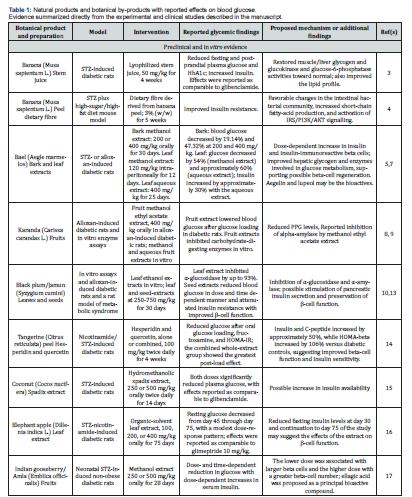
It has been found that various parts of Musa sapientum L. (banana) are effective in producing antihyperglycemic and antidiabetic effects in rats [3]. Traditionally it has been used in India for the treatment of diabetes and other disorders. After 4 weeks of treatment with lyophilized M. sapientum stem juice (50mg/kg) in streptozotocin-induced diabetic rats, antidiabetic and antihyperlipidemic effects were reported. While decreases in fasting and Postprandial Plasma Glucose (PPG) as well as glycated hemoglobin (HbA1c) levels were reported, study also reported elevated insulin levels. Furthermore, the diabetes-induced changes to the lipid profile, muscle and liver glycogen, and enzyme activity (i.e. glucokinase, glucose-6-phosphatase, and HMG-CoA reductase) were restored to near normal levels. The antihyperglycemic effect on Fasting Plasma Glucose (FPG) and PPG, as well as the antihyperlipidemic effects on Total Cholesterol (TC), Low Density Lipoprotein (LDL) + Very Low-Density Lipoprotein (VLDL)-cholesterol, triacylglycerol, and High-Density Lipoprotein (HDL)-cholesterol were found to be comparable to those of glibenclamide. Additionally, a decrease in HMG-CoA reductase activity was observed in the liver. This combination of glucose-lowering and lipid-lowering effects can be seen to be favorable in the management of type 2 diabetes and its complications [3]. Similarly, Wang et al [4] reported that dietary fiber from banana peel (3% w/w for 5 weeks) can improve insulin resistance in mice through beneficial changes in intestinal bacterial community, increased short chain fatty acid production and IRS/PI3K/AKT pathway.
Bael fruit (Aegle marmelos (L.) Corrêa) is another fruit commonly found in many Asian countries with diverse range of biological activity including antioxidant, hypoglycemic, antimicrobial, hepatoprotective, anti-inflammatory, and cardioprotective potentials. The methanol extract of both its bark and leaves has been reported to lower blood-sugar levels [5]. In this regard, 30 days of orally administered bael bark extract at either 200 or 400 mg/kg of streptozotocin-induced diabetic rats showed a dose-dependent decrease in blood glucose of 19.14% in the 200mg/kg group and 47.32% in the 400mg/kg group. In addition, insulin levels were also increased in a dose-dependent manner, along with other biochemical parameters, such as HbA1c levels, total protein content, biomarker enzymes including liver function enzymes (AST, ALT, ALP), hexokinase, glucose-6-phosphatase, and fructose-1,6-bisphosphatase, and liver glycogen contents were improved. The glucose-lowering effect seemed to be mediated through the regeneration of pancreatic β-cells, as an increase in insulin-immunoreactive β-cells was observed [5]. The investigators suggested that aegelin and lupeol may be the bioactive constitutes of the bark extract. Another study has reported a 54% decrease in blood-glucose levels after 12 days of treatment with 120 mg/kg of a methanol bael leaf extract administered intraperitoneally in alloxan-induced diabetic rats [6]. Furthermore, combined aqueous extracts of E. jambolana seeds and A. marmelos leaves at 200, 300 and 400 mg/kg resulted in reduced levels of serum glucose and lipids levels in alloxan-induced diabetic rats. These effects were associated with increased serum levels of insulin plus histological evidence for restoration of β-cells, which seemed to be dose-dependent [7].
Carissa carandas or Carissa congesta Wight (Karanda) has been reported to contain phytochemical compounds with antidiabetic, antioxidant, anti-inflammatory, antimicrobial, and antifungal properties. A methanol ethyl acetate soluble extract of its young fruits was given to fasting alloxan-induced diabetic rats 30 minutes before oral glucose tolerance test, using 3 g/kg glucose loading. Twenty-four hours after glucose administration, plasma glucose levels reduced by 40% in alloxan-induced diabetic rats treated with the extract product at 400 mg/kg dose as compared to the control diabetic rats; this glucose-lowering effect of the extract product was similar to that of metformin (50 mg/kg i.p.) [8]. Additional in vitro studies reported that C. carandas fruit extracts have an inhibitory effect on α-amylase [9]. Accordingly, it was suggested that these extracts may be further considered for the development of products for reducing postprandial hyperglycemia with minimum adverse effects [8,9].
Black plum (Syzygium cumini (L.) Skeels) is commonly found throughout many South Asian countries. This plant is a rich source of phytochemicals such as flavonoids, anthocyanins, carotenoids, essential oils, terpenes, and tannins; these phytochemicals are presumably responsible for the plant’s potential antidiabetic, anti-cancer, anti-inflammatory, antioxidant, and antimicrobial effects [10]. An in vitro study showed that an ethanol extract of black plum leaves resulted in up to a 93% inhibition of α-glucosidase activity [10]. In addition, hydroethanolic extract of S. cumini leaf at 500 mg/kg dose for 30 days produced beneficial effects on insulin resistance along with partial reversal of glucose intolerance in a rat model of metabolic syndrome; these changes were accompanied by reduced body weight and white adipose tissue mass [11]. Similarly, an ethanolic extract of S. cumini seed powder showed dose and time response effects for reducing fasting blood sugar and resorting functions of β-cells in alloxan-induced diabetic rats over 30 days. Blood glucose levels reduced by 10, 23 and 33% after treatment with 0.25, 0.5 and 0.75 g/kg of the seed powder extract, respectively, by the 8th day of the study; the glucose-lowering effect was further enhanced by the end of the study (day 30). Furthermore, histopathological examinations showed recovery of β-cells from damages induced by alloxan treatment [12]. Another in vitro study has found that the methanol extract from the kernel of black plum fruit showed antihyperglycemic activity, most likely attributed to the inhibition of α-amylase activity, since α-amylase activity inhibition was reported for the methanol seed extract [13].
The antidiabetic effects of oral administration of tangerine fruit peel-derived hesperidin and quercetin, individually or in combination at 100 mg/kg twice daily for 4 weeks have been examined in experimentally induced diabetic rats [14]. This treatment regimen was found to reduce serum glucose levels after oral glucose loading; the maximum effect was observed in the whole extract group (the combination therapy) at 60 minutes post oral glucose loading. Similarly, the levels of fructosamine, and HOMA-IR index were significantly reduced in the tangerine fruit peel extract-treated animals; these changes were accompanied by an approximately 50% increases in the levels of insulin and c-peptide. These changes were associated with a marked increase in β-cell function of 106% as assessed by HOMA-β as compared with that value in the control diabetic rats [14].
A hydro-methanol extract of the spadix of Cocos nucifera (coconut) was administered to streptozotocin-induced diabetic rats at 2 oral doses of 250 mg or 500 mg/kg twice a day for 14 days. By the end of the study, plasma glucose levels decreased significantly and comparably in the extract-treated groups; these effects were similar to those of gilbenclamide at 0.5 mg/day twice a day [15]. The investigators suggested a possible mechanism of action for the extract to increase insulin secretion from the β-cells or the release of insulin from bound sources.
Organic solvent extract of the leaves of Elephant apple (Dillenia indica L.) was given to streptozotocin nicotinamide-induced diabetic rats at oral doses of 100, 200, or 400 mg/kg for 75 days. Starting from the 45th day of treatment, the rats showed a significant decrease in fasting glucose levels as compared to the control group. The glucose lowering effects followed a light dose-response effect and kept being lower than control values until the end of the study. These effects were comparable to those of 10 mg/kg glimperide. Furthermore, the maximum insulin-lowering effect of the extract and the drug was seen on day 30 of the study [16].Another study reported that a methanol extract of Emblica officinalis (Indian gooseberry or amla) showed significant glucose-lowering effects in neonatal streptozotocin-induced non-obese diabetic rats over 28 days. This effect was reported to be dose and time dependent. Additionally, significant increases in the levels of serum insulin were observed, which was also dose dependent. Another finding of this study was that the lower-dose (250 mg/kg) was associated with larger β-cells and the higher dose (500 mg/kg) was associated with increased number of β-cells. It was suggested that ellagic acid could be the main bioactive compound in the extract and responsible for the observed antidiabetic properties [17].
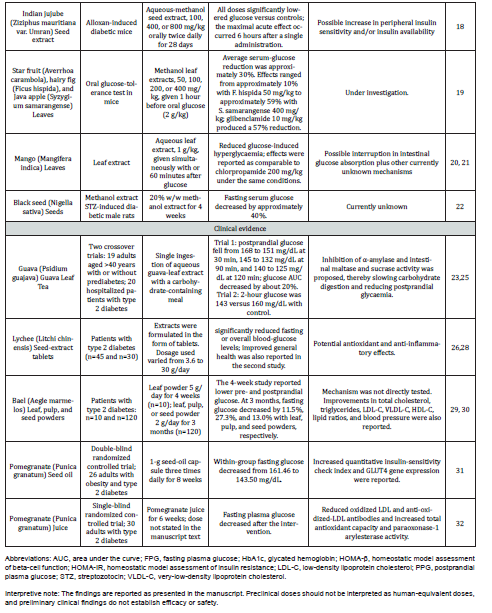
The seeds of Indian jujube (Ziziphus mauritiana var. Umran) were dried, grounded and mixed with methanol/water (1:1) to extract their bioactive compounds. The resultant powder was used to investigate its antidiabetic properties in alloxan-induced diabetic mice at oral doses of 100, 400, and 800 mg/kg twice a day for 28 days. At the end of the intervention period, all 3 doses of seed extract showed significant glucose-lowering effects as compared to the control group. Furthermore, the maximum glucose lowering effect was also observed 6 hours after a single administration of the extract [18]. The proposed mechanism(s) for such effect include an increase in peripheral insulin sensitivity and/or insulin availability.
Potential antidiabetic properties of the methanol leaf extract from Averrhoa carambola L. (star fruit), Ficus hispida L.f. (hairy fig), and Syzygium samarangense (Java applet) have been evaluated in a mouse model undergoing oral glucose tolerance test. The mice were given different amounts of the extract (50, 100, 200 and 400 mg/kg) one hour before the administration of oral glucose (2 g/kg). On average, an approximate 30% reduction was observed in serum glucose levels as compared to control value. The lowest effect was an almost 10% reduction for the 50 mg/kg of F. Fispida and the highest effect was around 59% reduction for 400 mg/kg of S. samarangnese; this study further reported a reduction of serum glucose level for 10 mg/kg glibenclamide by 57% as compared to the control values [19]. The investigators reported that the exact phytochemicals and their mechanism(s) of action can be established through additional investigations.
The aqueous extract of the leaves of Mangifera indica (mango) has also been explored for glucose-lowering effects in rats. In a study involving the administration of 1 g/kg extract either simultaneously or 60 minutes after glucose administration, resulted in a reduction of serum glucose levels. This glucose-lowering effect under glucose-induced hyperglycemia was comparable to that effect of chlorpropamide (200 mg/kg) under the same experimental conditions [20]. These investigators reported similar glucose-lowering effects of the leaf aqueous extract of mango in mice [21]. Interruptions in intestinal glucose absorption have been proposed, while other potential mechanism should be explored.
El-Rabey and colleagues [22] reported that administration of 20% w/wmethanol black seed (Nigella sativa) extract to streptozotocin-induced diabetic male ratsfor 4 weeks resulted in an approximately 40% reduction of fasting serum glucose levels [22].
Evidence from Clinical Trials
While the above-mentioned plant products and by-products have shown beneficial therapeutic effects in the animal models of diabetes, they remain relatively unexplored in clinical settings. Nonetheless, a few botanical products or by-products have been tested in clinical trials to establish their effectiveness in the treatment of type 2 diabetes in human subjects. For example, antidiabetic potential of an aqueous guava leaf extract named Guava Leaf Tea was tested in a crossover trial involving 19 subjects aged over 40 years with or without pre-diabetes. A single ingestion of Guava Leaf Tea significantly reduced postprandial blood glucose at 30, 90 and 120 min from 168 mg/dL to 151 mg/dL, 145 mg/dL to 132 mg/dL, and 140 mg/dL to 125 mg/dL, respectively, when compared with the control values. The area under the curve (AUC) of the glucose level after carbohydrate loading (ingestion of cooked rice) was also significantly reduced by about 20% compared to the control group [23]. Another crossover clinical trial on 20 hospitalized patients with type 2 diabetes reported that a single ingestion of Guava Leaf Tea significantly reduced 2-hour postprandial blood glucose levels as compared with those in the control group (143 mg/dL vs 160 mg/dL) [24]. Mechanisms of antidiabetic effects of Guava Leaf Tea, including inhibition of α-amylase as well as intestinal maltase and sucrase have been reviewed elsewhere [25].
Lychee seed extract tablets were tested on 45 patients with type 2 diabetes over a course of 12 weeks; this treatment was associated with significant reductions in fasting plasma glucose levels [26]. Likewise, significant blood glucose lowering effects were reported after oral administration of tablets containing lychee seed water extract in 30 diabetic patients [27]. These studies reported a very large range of doses from 3.6 to 30 g/day. The mechanisms and applications of lychee products for diabetes have been reviewed elsewhere [28].
The hypoglycemic effects of bael leaf powder administered to 20 type 2 diabetic patients at a dose of 5 mg/day has been examined over 16 weeks [29]. This treatment resulted in an approximately 20% reduction in postprandial glucose concentrations [29]. The effects of bael leaf powder in another study with 120 type 2 diabetics have also been reported. After 3 months of intervention with either 2 g/day bael leaf, pulp or seed powder, fasting blood glucose levels reduced by 11.5%, 27.3% and 13.0% in the leaf, pulp, and seed powder groups, respectively. Furthermore, reductions in total cholesterol (-7.8%, -9.3% and -5.0%), triglycerides (-10.9%, -8.5% and -6.6%), LDL-C (-14.4%, -17.0% and -8.0%), VLDL-C (-11.0%, -8.6% and -6.7%) and an increase in HDL-C (+17.0%, +19.4% and +4.8%) was also shown in the leaf, pulp, and seed powder groups, respectively. Additionally, the ratio of total cholesterol to HDL-C dropped from 5.3 to 4.2, 5.8 to 4.4, and 5.5 to 4.9 mg/dL; the ratio of LDL-C to HDL-C was also reduced from 3.6 to 2.7, 3.8 to 2.9, and 3.6 to 3.1mg/dL in the seed, pulp, and powder groups, respectively. Moreover, blood pressure was also noted to be decreased in the subjects of each treatment group [30].
The antidiabetic effects of pomegranate have also been reported in a double-blind, randomized, controlled clinical trial, with 1 g pomegranate seed oil capsule consumption 3 times daily for 8 weeks. In this study, twenty-six obese type 2 diabetic patients aged 30-50 years showed a significant within-group decrease in fasting blood glucose from 161.46 mg/dL at baseline to 143.50 mg/dL after treatment. Increases in the quantitative insulin sensitivity check index as well as GLUT-4 gene expression, a key factor in the treatment of type 2 diabetes, were also observed [31]. Another single-blind, randomized, controlled clinical study with 30 individuals with type 2 diabetes aged 40-65 years has evaluated the effects of pomegranate juice on oxidative stress and fasting plasma glucose levels. In this regard, after six weeks of drinking 200 ml of pomegranate juice fasting plasma glucose levels decreased by approximately 7%; oxidized LDL and anti-oxidized LDL antibodies also were found to be reduced, while total serum antioxidant capacity and paraoxonase 1 arylesterase activity were observed to be increased [32]. Taken together, these findings suggest that pomegranate products may have antidiabetic potential [31,32].
Discussion and Conclusion
In this minireview we have attempted to review and discuss the available data pertaining to beneficial modulation of glucose metabolism by several botanical products and by-products observed in experimental animals or subjects with type 2 diabetes. These studies have been summarized in (Table 1). The international scientific community has consistently maintained the exploration for affordable, safe, effective and abundant natural products for managing non-communicable chronic diseases such as type 2 diabetes. While the etiology of type 2 diabetes is not fully understood, many observational and epidemiological investigations suggest a meaningful relationship between diet, lifestyle, state of overweight/obesity in the pathogenesis of type 2 diabetes. Type 2 diabetes can be successfully managed through appropriate dietary and lifestyle changes along with available evidence-based therapies supported by national and international guidelines. Current nutritional guidelines recommend individualized eating patterns that account for cultural preferences, metabolic goals, comorbidities, and total energy requirements. In general, dietary patterns for people with type 2 diabetes should emphasize non-starchy vegetables, particularly dark-green, red, and orange varieties; whole fruits; legumes; minimally processed whole grains; nuts and seeds; and appropriate quantities of lean protein from plant and animal sources, including fish, poultry, eggs, and low-fat dairy or nondairy alternatives. Carbohydrate sources should preferably be nutrient-dense, rich in dietary fibre, and minimally processed. Individuals with type 2 diabetes should minimize their consumption of sugar-sweetened beverages, sweets, refined grains, red and processed meats, and ultraprocessed foods. Foods rich in saturated and trans fats should also be limited, with unsaturated fats from sources such as nuts, seeds, fish, and vegetable oils used preferentially where appropriate [33].
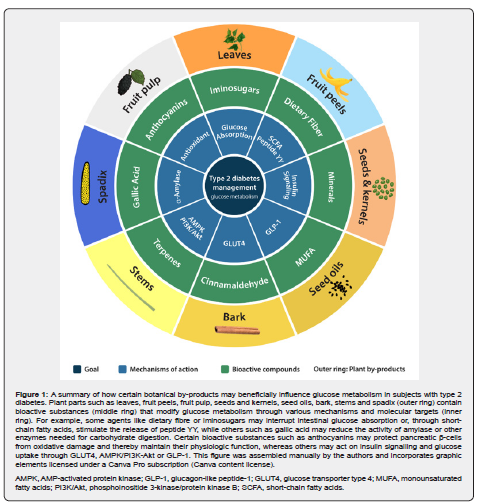
Plant-based foods contain various bioactive compounds that may help with glucose metabolism. For example, dietary fibers may interrupt glucose absorption and thereby reduce postprandial blood glucose levels. Other compounds may inhibit amylase activity and therefore halt starch digestion, resulting in reduced availability of glucose for intestinal absorption. Some bioactive compounds may protect β-cells from oxidative stress due to their antioxidant activities. Under these protective conditions β-cells can continue their physiologic function to produce adequate amount of insulin for cellular glucose uptake and utilization for energy production. Other bioactive compounds such as iminosugars may compete with glucose for intestinal absorption. Another plausible mechanism is beneficial alterations in the intestinal microbial milieu which may directly and/or indirectly influence glucose metabolism and physiologic functions of the organs associated with carbohydrate metabolism such as the pancreas and liver. This information is illustrated in (Figure 1).
In conclusion, this minireview has summarized the available preliminary evidence indicating that some botanical by-products that are routinely consumed in many countries and also contain the above-mentioned bioactive compounds may offer benefits in diabetes control. We do not recommend that these products replace established guideline-directed medical therapies; rather, they may have a potential role as complementary adjuncts when supported by adequate evidence. Depending on disease severity and the degree of glycemic control, patients may require insulin and/or other conventional glucose-lowering therapies.
Current support for these therapeutic approaches is derived largely from anecdotal observations, preclinical experiments, and small or methodologically limited clinical studies. The biologically active molecules responsible for the reported glucose-lowering effects must therefore be isolated, characterized, and standardized. Their mechanisms of action, pharmacokinetic properties, effective doses, potential toxicity, and interactions with conventional glucose-lowering medications should also be systematically evaluated. Promising compounds should subsequently undergo testing in adequately powered, well-designed randomized controlled trials using clinically meaningful glycemic and safety outcomes. Such an approach is essential before these products can be recommended as evidence-based adjuncts to established diabetes therapies.
Author Contributions
Nikon Moghadasian: database search and collection of data, writing the draft and editing; Bernhard Sikora, Babak Bahadori, Babak Malekian and Agnieszka Magg: revision and generation of the Figure; Ashis Shah, revision and clinically relevant discussion materials plus generation of Table 1; Denice Bay, Gabor Fischer, Paramjit S. Tappia and Bram Ramjiawan: revision; Mohammed H. Moghadasian: revision, and supervision.
All authors provided final approval of the version to be published. All authors agree to be accountable for all aspects of the work.
Acknowledgement
The research program of MHM is supported by the Natural Sciences and Engineering Research Council of Canada (NSERC). The infrastructural support provided by the University of Manitoba and St. Boniface Hospital Albrechtsen Research Centre is appreciated.
Declaration of Interest
Bernhard Sikora, Agnieszka Magg and Babak Bahadori have common shares of BerBerSan® GmbH company. Nikon Moghadasian is the son of Mohammed Moghadasian. Other authors have no conflict of interest to disclose.
Use of AI Technology
AI technology was occasionally used for editing and grammar purposes only. No AI technology was used to create any parts of this manuscript.
References
- World Health Organization (2024) Diabetes. World Health Organization.
- Alam S, Dhar A, Hasan M, Richi FT, Emon NU, et al. (2022) Antidiabetic potential of commonly available fruit plants in bangladesh: updates on prospective phytochemicals and their reported moas. Molecules 27(24): 8709.
- Dikshit P, Shukla K, Tyagi MK, Garg P, Gambhir JK, et al. (2012) Antidiabetic and antihyperlipidemic effects of the stem of Musa sapientum Linn. in streptozotocin-induced diabetic rats. J Diabet 4(4):378-385.
- Wang M, Yang F, Yan X, Chao X, Zhang W, et al. (2022) Anti-diabetic effect of banana peel dietary fibers on type 2 diabetic mellitus mice induced by streptozotocin and high-sugar and high-fat diet. J Food Biochem 46(10): e14275.
- Gandhi GR, Ignacimuthu S, Paulraj MG (2012) Hypoglycemic and β-cells regenerative effects of Aegle marmelos (L) Corr bark extract in streptozotocin-induced diabetic rats. Food Chem Toxicol 50(5): 1667-1674.
- Sabu, M C, Kuttan R (2004) Antidiabetic activity of aegle marmelos and its relationship with its antioxidant properties. Indian J Physiol Pharmacol 48 (1): 81-88.
- Gohil T, Pathak N, Jivani N, Devmurari V, Patel J (2015) Treatment with extracts of Eugenia jambolana seed and Aegle marmelos leaf extracts prevents hyperglycemia and hyperlipidemia in alloxan induced diabetic rats. Intl J Pharm and Pharmacol 4 (3): 001-006.
- Itankar PR, Lokhande SJ, Verma PR, Arora SK, Sahu RA, et al. (2011) Antidiabetic potential of unripe Carissa carandas Linn. fruit extract. J Ethnopharmacol 135(2):430-433.
- Madhuri S, Neelagund SE (2019) Anti-oxidant, anti-diabetic activity and DNA damage inhibition activity of Carissa carandas fruit. Intl J Adv Res Dev 4:75-82.
- Artanti N, Maryani F, Dewi RT, Handayani S, Dewijanti ID, et al. (2019) In vitro antidiabetic, antioxidant and cytotoxic activities of Syzygium cumini fractions from leaves ethanol extract. Indonesian J Cancer Chemoprevent, 10(1): 24-29.
- Sanches, JR, França, LM, Chagas, VT, Gasper RS, Santos KAD, et al. (2016) Polyphenol-Rich extract of syzygium cumini leaf dually improves peripheral insulin sensitivity and pancreatic islet function in monosodium L-Glutamate-Induced obese rats. Front Pharmacol 7:48.
- Singh N, Gupta M (2007) Effects of ethanolic extract ofSyzigium cumini (Linn) seed powder on pancreatic islets of alloxan diabetic rats. Indian J Exp Biol 45(10): 861-867.
- Gajera HP, Gevariya SN, Hirpara DG, Patel SV, Golakiya BA (2017) Antidiabetic and antioxidant functionality associated with phenolic constituents from fruit parts of indigenous black jamun (Syzygium cumini L.) landraces. J F Sci Technol 54(10) 3180-3191.
- Ali AM, Gabbar MA, Twab ASM, Fahmy EM, Ebaid H, et al. (2020) Antidiabetic potency, antioxidant effects, and mode of actions of citrus reticulata fruit peel hydroethanolic extract, hesperidin, and quercetin in nicotinamide/streptozotocin-induced wistar diabetic rats. Oxid Med Cell Longev 2020: 1730492.
- Naskar S, Mazumder UK, Pramanik G, Gupta M, Kumar SRB, et al. (2011) Evaluation of antihyperglycemic activity of Cocos nucifera Linn. on streptozotocin induced type 2 diabetic rats. J Ethnopharmacol 138(3): 769-73.
- Kaur N, Kishore L, Singh R (2017) Dillenia indica L. attenuates diabetic nephropathy via inhibition of advanced glycation end products accumulation in STZ-nicotinamide induced diabetic rats. J Tradit Complent Med 8(1): 226-238.
- Fatima N, Hafizur RM, Hameed A, Ahmed S, Nisar M, et al. (2017) Ellagic acid in Emblica officinalis exerts anti-diabetic activity through the action on β-cells of pancreas. Eur J Nutr 56(2): 591-601.
- Bhatia A, Mishra T (2010) Hypoglycemic activity of Ziziphus mauritiana aqueous ethanol seed extract in alloxan-induced diabetic mice. Pharm Biol 48(6): 604-610.
- Shahreen S, Banik J, Hafiz A, Rahman S, Zaman AT, et al. (2011) Antihyperglycemic Activities of Leaves of Three Edible Fruit Plants (Averrhoa Carambola, Ficus Hispida and Syzygium Samarangense) of Bangladesh. Afr J Tradt Complement Altern Med. 9(2): 287-291.
- Aderibigbe AO, Emudianughe TS, Lawal BA (1999) Antihyperglycaemic effect of Mangifera indica in rat. Phytother Res. 13(6): 504-7.
- Aderibigbe AO, Emudianughe TS, Lawal BA (2001) Evaluation of the antidiabetic action of Mangifera indica in mice. Phytother Res 15(5): 456-8.
- El Rabey HA, Al-Seeni MN, Bakhashwain AS (2017) The antidiabetic activity of nigella sativa and propolis on streptozotocin-induced diabetes and diabetic nephropathy in male rats. Evi Based Complemnt Altern Med 2017: 5439645.
- Deguchi Y, Osada K, Uchida K, Kirumura H, Yoshikawa M, et al. (1998) Effects of extract of guava leaves on the development of diabetes in the db/db mouse and on the postprandial blood glucose of human subjects. Nippon Nōgeikagaku Kaishi 72(8): 923-931.
- Ishibashi K, Oka M, Hachiya M, Maeda T, Tajima N (2004) Comparison of voglibose and Guava Tea (Bansoureicha®) on postprandial blood glucose level. J Pract Diabetes 21: 455-458.
- Deguchi Y, Miyazaki K (2010) Anti-hyperglycemic and anti-hyperlipidemic effects of guava leaf extract. Nutr & Metab 7: 9.
- Zhang H, Teng Y (1985) Effect of li ren (Semen Litchi) antidiabetes pills in 45 cases of diabetes mellitus. J Traditional Chin Med (2): 40-41.
- Shen MF (1991) Clinical study on the treatment of diabetes mellitus with lychee seed tablets. Chin Traditional Patent Med 11: 24.
- Zhang Y. Jin D, An X, Duan L, Duan Y, et al. (2021) Lychee seed as a potential hypoglycemic agent, and exploration of its underlying mechanisms. Front Pharmacol 12.
- Ismail MYM (2009) Clinical evaluation of antidiabetic activity of Trigonella seeds and Aegle marmelos leaves. World Applied Sci J 7(10): 1231-1234.
- Singh U, Kochhar A (2012) Effect of supplementation of bael (Aegle marmelos L.) and nutrition counseling on blood glucose, lipid profile and blood pressure of non-insulin dependent diabetics. Intl J Green and Herbal Chem 1(3): 284-295.
- Khajebishak Y, Payahoo L, Alivand M, Hamishehkar H, Mobasseri M, et al. (2019) Effect of pomegranate seed oil supplementation on the GLUT-4 gene expression and glycemic control in obese people with type 2 diabetes: A randomized controlled clinical trial. J Cell Physiol 234(11): 19621-19628.
- Sohrab G, Ebrahimof S, Sotoudeh G, Neyestani TR, Angoorani P, et al. (2017) Effects of pomegranate juice consumption on oxidative stress in patients with type 2 diabetes: a single-blind, randomized clinical trial. Intl J Food Sci and Nutr 68(2): 249-255.
- American Diabetes Association Professional Practice Committee for Diabetes. Facilitating positive health behaviors and well-being to improve health outcomes: standards of care in diabetes-2026. Diabetes Care. (2026) 49(Supplement_1): S89-S131.