




 IJESNR Home



Abstract
Keywords:Anthropogenic effects; Environmental degradation; Urban communities; Soil conservation; Firewood; Charcoal; Livestock use; Fossil fuels; Agricultural fertilization; Deforestation; Overgrazing; Industrial pollution
Introduction
Since its establishment as a region in 1983, with Ngaoundéré as its capital and the Vina department, the region has experienced a population boom linked to its central location, its role in distribution and storage of goods, and its impact on national and international migration [1].
It is the crossroads between the Far North and the southern part of Cameroon. It is also the terminus of the CAMRAIL railway line. Located in the agro-ecological zone of the Guinean highlands, the Adamawa region is considered the water tower of Cameroon. The Vina department, known for its fertile land and good pastures, experiences migratory flows and has become a center for farmers and herders (MINPAT, 2010). The establishment of the state university in the same department led to an increase in the number of merchants and civil servants. Linked to this population growth, the department faces numerous problems, including the degradation of arable land, overgrazing, and insufficient water for domestic and livestock use (Loudet et al., 1977; IRAD, 2010). The Mbororo herders, with their systems of managing pastoral resources through dispersal across cultivated and fallow land, exhibit behavior that is difficult to control (Winter, 1967; Piot, 1969; Rippstein, 1986). This type of resource management failure complicates the long-term monitoring of protected areas and corridors [2]. Although these pristine bushlands were reserved for the expansion of housing and public investment, they are now coveted by herders and farmers. The customary and administrative authorities, who are supposed to manage these areas equitably, are currently maintaining a vague and disorganized management system. In the outskirts of the city of Ngaoundéré, access to land, pastoral resources, and water is increasingly becoming a source of socioeconomic and cultural conflicts, as well as environmental problems.
These peripheral areas, recognized as agricultural and cattle-raising lands, face serious problems with overgrazing and the premature depletion of water resources. The immediate consequences affect the living standards of local and urban communities. The gradual alteration of pastures and uncontrolled water sources result in decreased crop yields, livestock losses, and high prices for feed supplements and veterinary products. Yet, as early as the 1960s, the Cameroonian state had already established programs for the conservation of environmental resources. This practice, enshrined as an element of social prestige since the colonial period, formed the basis of their power. From that time, they had laid the foundations for the protection of natural resources (Rodary, 2003). Hence the initiation of the creation of game reserves after independence, which completely prohibited hunting and logging by indigenous populations.
Despite the establishment of regulated areas in which only persons in possession of a seasonal operating permit will be authorized to cut wood, fish, and hunt.
This study aims to assess the degree of impact of changes to these resource reserves due to human use or loss through natural factors. Two vital resources were selected: firewood and water. The Dibi and Mbé areas served as the experimental sites. These two resources are used daily by all households and can be quantified. Regarding firewood, we will limit ourselves to quantifying consumption (firewood or charcoal) in kg/day/ household and water in liters/day/household, then monthly and annually. The environmental impact can be projected into the future by applying the UN equation (2005).
Literature Reviews
Soil conservation, a major concern is becoming a major project on a global scale. All continents are affected: erosion, compaction, acid rain, pesticides, heavy metals, and salinization are all factors in soil degradation, not to mention soil loss due to artificialization.
The effects of erosion are worsening in various regions of the world. Not only are upstream plots and catchments degraded, but this can have catastrophic downstream consequences on sediment deposition, leading to the silting up of outlets and increasingly frequent flooding.
Adverse effects occur on water quality with various chemical (nitrates, phosphates, pesticides) and physical (solid suspensions) pollution.
Soils are not only subject to physical and chemical degradation but also to pollution from various sources: pollution linked to atmospheric deposition (acid rain), particularly substances from the combustion of fossil fuels, agricultural fertilization, and farming practices (excess fertilizers, pesticides), not to mention accidental or clandestine pollution (burial of toxic waste, illegal dumping). It was around the 1970s that a growing awareness of environmental problems emerged among both authorities and society as a whole. The influence of exponential population growth began to have a very significant impact on the quantity and quality of natural resources; the soil was not spared.
Soil degradation worldwide is primarily caused by human activities: intensive agriculture, irrigation, deforestation, overgrazing, and industrial pollution. Soil is considered degraded when it has lost some of its functions, such as nourishing plants and animals, filtering water, or supporting significant biodiversity. From mild to severe degradation, this phenomenon affects approximately 20 million km², representing nearly 60% of arable land. Even uncultivated soils are already degraded by water and wind erosion, salinization, and deforestation.
Today, millions of people are suffering the consequences. This number will reach nearly two billion by 2020 if nothing changes. For Europe, for example, the European Environment Agency (2015) identifies the following main threats: water erosion (25% of land area), land fragmentation (30% of land area), intensification of agricultural production, land artificialization, erosion, etc.
The first major form of degradation is water erosion, a process by which rainwater detaches and carries away soil particles. It is largely linked to runoff, that is, the flow of rainwater or snowmelt across the soil surface. Erosion is exacerbated by agricultural practices, which, for various reasons, prevent optimal water penetration into the soil, thus increasing runoff.
Definition
Environmental impact assessments
performance indicators (EPIs) assess the daily, monthly, and annual per capita (per household) consumption of a resource. are effective in that they focus more on methods and strategies for protecting the environment than on the means of managing or restoring it. However, with over 20 years of experience, these procedures have become tools for raising awareness and achieving success in several countries (NEPAD 2001). It is advisable to apply them for the sustainable management of natural resources by individuals or government sectors in countries with fragile agroecological zones (UN 2002). EIAs are... Mandatory procedures in most poor countries to obtain project financing from major donors such as the World Bank, the IMF, and Regional Development Banks (African, Asian, Inter-American, European) for investment, reconstruction, and development (UN 2002; FAO 2010; NEPAD 2012). EIAs are composed of several essential components and are defined as follows:
Indicators
Regarding indicators used in studies of spatial reference units in the Sudano-Sahelian zone, the following definitions are given: An indicator is a parameter or a calculated value (index) derived from a set of parameters. It provides information on a phenomenon affecting the system or on the state of its elements. The values of the indicators, during observation periods, are compared to benchmark values in order to determine trends and irreversibility thresholds (those that can no longer be modified or restored). Three main types of indicators are distinguished: (i) indicators of the state of the environment; (ii) indicators of pressure on the environment (natural processes and human activities); (iii) indicators of responses provided by humans and societies.
Currently, fifty-two African countries have signed the United Nations Convention to Combat Desertification and have already developed action plans aimed at improving land productivity, rehabilitating soils and vegetation, and ensuring the rational management of water resources. Cameroon is one of the countries committed to conserving its natural resources by implementing laws and decrees to effectively manage these vital resources.
Impact of resource extraction
To determine the degree of impact of resource exploitation
on a given environment, one must understand the relationship
between populations and available resources. This relationship
is primarily determined by knowledge of several very useful,
even essential, indicators: notably, the age of the population, the
sex ratio, net migration, average household size, the location of
territories, and the level of resistance from certain stakeholders.
a) The age composition is important because it determines
the relative weight of adults, who form the working population;
children; and the elderly (non-productive groups), whose numbers
determine essential social needs, the economic support for which
is provided by these working adults. Generally speaking, the
different age groups have different consumption needs, which the
planner must take into account. The active labor force potential
within a given population determines the exact number of active
individuals and their potential to produce and utilize available
resources in a given environment. This ratio is sometimes far
removed from productive equilibrium (a higher number of women
than men). This is the case, for example, in areas affected by high
levels of immigration or differentiated emigration (between those
leaving and those arriving), or after violent armed conflicts where
men are disproportionately affected. This balance also determines
net migration.
b) Migration affects the growth rate of a local village’s
population. For example, the very rapid population growth of large
cities in poor countries is mainly due to high levels of immigration,
driven by the search for improved living conditions in urban
centers (Population and Housing Census) 2010). On the other
hand, emigration (through rural exodus) significantly reduces
the population growth rate of certain rural areas, sometimes
even making it negative. In all cases, migratory flows affect the
population composition by sex and age, as well as environmental
pressure.
c) The location and average size of households are
important indicators for estimating the impact of resource
extraction (soil, plants, animals, water) in a rural environment.
According to NEPAD reports (2012), human pressure accounts for
a large part of the identified environmental problems.
d) Calculation of Wood Consumption (Source: United
Nations (2005)) The general formula: I = p *a *t : où
where, I: environmental impact où, p: population (number of
inhabitants); a: unit consumption (wood energy required to cook
food), t: technology used (3-stone hearth for cooking food)
In addition to net population growth, there is also an explosion in per capita energy consumption, which leads to withdrawals from natural resources.
Practical example: 1 million villagers using 10 three-stone hearths, wood demand: 1 million * 1m³/person/year = 1 million m³ / year; 1 million, wood demand: 1 million * 1.5m³/person/ year = 1.5 million m³ / year (high per capita consumption ): 1 million, wood demand 1 M * 0.7m³/ capita/year = 0.7 million m³ / year (low consumption due to technological improvement ): 1.4 million, wood demand 1.4M * 0.7m³ / capita/year = 1 million m³ / year ( population growth and low consumption with technological improvement ). This example shows that we can either decrease the pressure on the environment (through improved technology) or maintain the same pressure on the environment (through population growth). Irreversible and reversible pressure.
In the case of logging primary forests, the impact is considered irreversible because it is impossible, on a human timescale, to restore the age structure, the ecosystem, and the flora/fauna associated with these primary forests. However, in the case of the deliberate clear-cutting of a plantation or other areas (which were artificially established), it is possible to regenerate the plantation within a few years or decades; this is referred to as a reversible impact.
In practice, the territory is an ecosystem is a collection of ecosystems (biotope and biocenosis). The biotope is the physical substrate (mineral, aquatic), while the biocenosis is the community of living organisms, including humans, fauna, and flora, maintaining reciprocal relationships with each other. The ecosystem, being an open system, receives solar energy that enables the functioning of its various components, which both emit and receive irretrievable heat from interplanetary space.
The atmospheric layer receives carbon dioxide and combustion gases from the biosphere, water vapor from the hydrosphere, and precipitates (rain) water laden with residues into the hydrosphere. The hydrosphere (water in oceans, lakes, and rivers) receives precipitation, waste from the biosphere, and the product of river and stream erosion. It sends stored materials to the lithosphere (sediments), returns pure water to the atmosphere through evaporation, and mineral elements to the biosphere (mineral water). The lithosphere stores residues from the biosphere and hydrosphere and returns them, after recycling, to the hydrosphere. The biosphere receives oxygen from the atmosphere, water and mineral elements from the hydrosphere, and releases carbon dioxide and combustion gases into the atmosphere, and waste into the hydrosphere and lithosphere.
The biosphere encompasses several elements, each with its own operating cycles. Specifically, producers (primarily plants) receive solar energy from the atmosphere, CO2 and mineral salts from consumers, and mineral elements from decomposers. Through photosynthesis, they (producers) provide consumers with oxygen and organic matter (fruits, vegetables, grains) and biodegraded waste for decomposers. Consumers (animals, humans) receive oxygen and organic matter from producers and, through respiration, return CO2 and mineral salts to these same producers, producing waste that is sent to decomposers. Decomposers (for example, manure) receive the waste from producers and consumers, recycle it, and produce mineral elements that are returned to the producers. The biosphere determines the degree of impact of an activity that accumulates over one or more years on the environment (the soil, groundwater). These resources store quantities of solid debris and chemical pollutants, thus altering their original structure in the absence of restoration intervention.
Context of the Study
Land is an essential resource for humankind, providing sustenance for over 7.5 billion people worldwide each day. However, it is also a scarce resource, with only 33 million km² of arable (or cultivable) land remaining today, representing just 6.4% of the Earth’s surface area.
The United Nations Biodiversity Conference (COP15) comes at a time when the web of life on Earth is unraveling. Human activity is driving a million plant and animal species towards extinction, while more than half of the world’s GDP depends on nature.
We examine the five main factors that fuel nature loss, identified by the recent global assessment report of the Intergovernmental Science-Policy Platform on Biodiversity and Ecosystem Services (IPBES).
Changes in land use
The following photos show the environmental changes resulting from human effects (Figure 1).
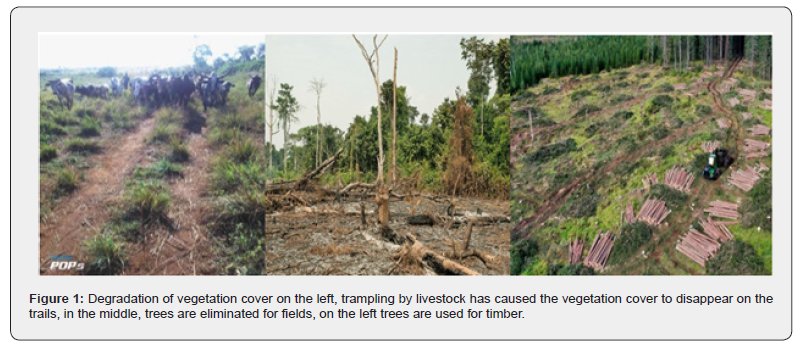
The main driver of biodiversity loss is how humanity uses land and sea. This includes the conversion of land cover such as forests, wetlands, and other natural habitats for agricultural and urban purposes.
Since 1990, approximately 420 million hectares of forest have been lost due to land-use change. Agricultural expansion remains the primary driver of deforestation, forest degradation, and the loss of forest biodiversity.
systems are the primary drivers of biodiversity loss, with agriculture alone being the identified threat to more than 85% of the 28,000 species threatened with extinction. Harvesting materials such as minerals from the ocean floor and building cities also have negative consequences for the natural environment and biodiversity.
Today, human activities have such a significant impact on ecosystems that we now speak of anthropogenic periods (periods where human action has radically transformed the environment).
The recent IPBES report on the sustainable use of wild species reveals that the unsustainable use of plants and animals not only threatens the survival of a million species worldwide, but also the livelihoods of billions of people who depend on wild species for food, fuel, and income.
According to scientists, halting and reversing land and ocean degradation could prevent the extinction of one million endangered species. Furthermore, restoring just 15% of ecosystems in priority areas will improve habitats, thereby reducing extinctions by 60%.
The COP15 negotiations should focus on protecting plants, animals, and microbes whose genetic material forms the basis of medicines and other life-saving products. This issue, known as access and benefit-sharing, is governed by an international agreement, the Nagoya Protocol.
Delegates at COP15 will examine how marginalized communities, including Indigenous Peoples, can benefit from a subsistence economy, a system based on the provision and regulation of ecosystem services for basic needs. Through their spiritual connection to the land, Indigenous Peoples play a vital protective role as guardians of biodiversity.
Legal framework
The Cameroonian state has committed to continuing along these lines to ensure the sustainable and rational management of all resources within the national territory. The “authoritarian” imposition of protected areas occurred at a time when, in many places, a sharp reduction in resources (soil, vegetation, water) was observed due to the expansion of cultivated land and the uncontrolled exploitation of these resources without any rational management plan. However, even in the years preceding independence, the forest reserves in the North were being transformed into protected areas, even though many of them were already inhabited by farming and herding communities.
The legal framework governing the management of natural resources, and more specifically plant and animal resources, is regulated in Cameroon by Law No. 94/01 of January 20, 1994, concerning the forestry, wildlife, and fisheries regime, along with its implementing decrees. In particular, Decree No. 95/466/ PM of July 20, 1995, establishes the procedures for the wildlife regime. Municipalities, village communities, and individuals exercise all property rights over their resources, subject to the restrictions stipulated by land and state property laws and by the aforementioned law (Article 7). The right of customary or traditional use is recognized by law for local communities to harvest all forest, wildlife, and fisheries products, with the exception of protected species, for personal use.
In cases of intense land pressure, such as in Ngong, Garoua in the North, plots are often held without prior payment. During a recent agricultural season, in the village of Ouro-Doukoudjé, Lagdo, also in the North, a long-time tenant farmer lost his plot to another young farmer who paid twice as much. Competition for land has become a recurring issue for the younger generation in fertile or reserve areas, especially given the high population density (farmers and herders) due to the high productivity in these areas, leading to land saturation. The emergence of land conflicts is frequent and has social and political implications in all the territories surrounding the city of Ngaoundéré. This is the result of a combination of past and present factors. Land disputes in northern Cameroon are often intractable due to the traditional view of the lamido as the land chief, in contrast to the southern Cameroonians who tend to consider the mayor and sub-prefect as such. Faced with this traditional power of the lamido and the djaouros, land conflicts between different actors are extremely difficult to resolve using the law. This difficulty also stems from the link between democratization and decentralization as they are currently implemented. This link amplifies the alliance between the administration and the traditional chieftaincies. This alliance forms a unified force to reinforce the traditional power of the land chiefs (lamido). In turn, the state administration... benefits from the support of the lamido during electoral occasions.
Conflict management
It refers to Decree No. 78/263 of September 3, 1978, which establishes the procedures for settling agro-pastoral disputes. This text serves to manage disputes that may arise during the development of a project or other activity and indicates the steps to be taken in case of conflict. Article 1 of the decree specifies that an advisory commission is established and tasked with:
To organize rural areas into agricultural zones and livestock zones according to the needs of the population and the requirements of development. These zones are subject to private ownership; farmers may only possess a seasonal right of use, taking into account the conditions environmental, socioinstitutional, technological and economic.
Furthermore, new threats, such as climate change, the uncontrolled spread of exotic species, the uncontrolled expansion of cities, and pollution caused by cars and industry, risk exacerbating poverty, environmental degradation, and the health of the population in the next thirty years. (AEA 2005; CMAE 2002): “The Future of the Environment in Africa” and the African Ministerial Conference on the Environment, respectively.
Land degradation currently affects two billion undernourished people worldwide, according to United Nations assessments (op. cit. 2018). It affects all continents, but particularly North and sub- Saharan Africa, Central Asia, the Middle East, and parts of the Americas.
Land degradation leads to a permanent loss of biological and economic productivity in ecosystems [3]; this is due to wind and water erosion, the loss of soil water retention capacity, resulting in decreased fertility and the absence of vegetation. to develop. Soils are exposed to climatic hazards. At the current rate of global warming, we will witness, in the coming decades, the extinction of a considerable number of animal and plant species, and the livelihoods of farmers and tourism will be negatively affected.
The stability and use of food resources (INS, 2018) state in their documents that additional heat stress and drier soils risk reducing agricultural yields and hindering pastoral development in the various agro-ecological regions of sub-Saharan Africa. The increasing frequency and spread of crop failures due to climate change will exacerbate the risk of post-harvest losses. Food security risks will then be enormous, and the most vulnerable populations will be farmers, the poorest rural and urban dwellers, etc. The impacts will be very significant and will be characterized by massive population displacements, disruptions to economic activities, especially agriculture, with increasingly heavy economic and social costs for agriculture, threatening this vital sector of our national economy.
Thus, it falls to naturalists, environmentalists, and decisionmakers to raise the alarm at the appropriate time to safeguard the ecosystem and improve the living standards of these farmers who struggle daily to survive. To assess the effects of various changes or modifications to a rural environment caused by natural disturbances, and especially by human intervention, one often resorts to measuring or evaluating simple parameters, signs, and characteristics of the area’s ecological system.
Materials and Methodological Approaches
Material
a) The university (department of geography) and the IRAD
office (section of environment and natural resource management)
are the places where the study was carried out and written.
b) Laptops, pencils, questionnaires, and digital cameras for
photos are the computer equipment used.
c) The data has two sources
i. The library, internet research, and correspondence
constitute the primary source.
ii. The information gathered from fieldwork (surveys,
interviews, discussions and household visits) forms the second
source
Human Resources (three teams)
a) The working team consists of teaching researchers from
the university and researchers from IRAD.
b) Neighborhood chiefs or their representatives, village
elders, extension agents, and delegates from the GICs,
c) Young boys and girls, and women were our main sources
of information because they have a better understanding of the
quantities of firewood or charcoal used per day and also of water
in households.
d) Young indigenous people from the villages with an
average level of education served as interpreters-facilitators,
especially with women and girls.
Methodological approaches
a) We held participatory discussions with village chiefs,
household heads and delegates from the GICs.
b) We went from household to household, talking
extensively with the young boys, girls, and women about the
crucial periods of water and firewood shortages. The women
were very familiar with the periods of water and firewood scarcity
and could estimate the amount of water and wood used daily for
cooking.
c) To determine all the water resources of the sites, a
systematic inventory was carried out through our visits to all the
concessions and all the neighborhoods of the villages.
d) The sample size is the number of households selected
per site.
e) All data has been processed and interpreted after
statistical analysis.
Statistical analysis
a) The equation defined by the United Nations (2005); ( I
= p * a * t : where, I: environmental impact where, p: population
(number of households); a: unit consumption (kg or tonne per
household) (wood energy requirement for cooking food), t:
technology used ( type of fireplace) to assess the quantities of wood
consumed per capita was applied here to estimate the quantity
of wood consumed per household/day in order to determine the
environmental impact in the year and in the decades, decades,
decades to come, etc.
b) And for water we applied basic calculations (volume of
water used in liters per day per household) in order to estimate
the degree of impact on supply sources and the consequences in
the coming years etc.
c) After these details on the materials and methodological
approaches, we justify the choice of sites.
Location and justification of site selection
The study sites are the peripheral areas of Ngaoundéré, capital of the Vina department. Around the 1950s, they were part of the districts of Ngaoundéré (current capital of the region) until the years of independence and whose densities were 2.5 inhabitants/ km² (Boutrais et al. 1980).
Over the years, as the city became too small to carry out certain activities, these outlying areas became places where various urban and rural actors could find refuge. Some came from inter-regional localities and others from distant origins to invest in agricultural and pastoral activities.
Nowadays, these areas have become the centers for supplying cities with foodstuffs (cereals, tubers, peanuts, beans, cowpeas, etc.) and are also breeding grounds and centers for the sale and resale of cattle, goats, chickens, and other livestock. In previous decades, several factors, such as the lack of competition for land due to the availability of pastoral resources and fertile arable land, encouraged the mass settlement of farmers there. When a farmer finds that agricultural land is no longer productive or that a pasture no longer meets the livestock’s needs for fodder or water, they move to undeveloped areas or areas with favorable conditions.
The choice of the two sites (Dibi and Mbé) is justified not only by this massive concentration of actors (farmers and herders), but also and especially because Ngaoundéré, as the capital of the Vina department, has become the link city between the Far North and the South of Cameroon. Landlocked neighboring countries (Chad and the Central African Republic) store their goods there in large warehouses rented from CAMRAIL. Furthermore, by virtue of their location on National Highway No. 1, south of Ngaoundéré on the road to Bertoua or Yaoundé, and Mbé north of Ngaoundéré beyond the escarpment on the road to Garoua, the two sites are representative of the department and the region. The map of the Vina department (figure) below shows the study sites.
A profoundly transformed plant cover
Numerous qualitative observations demonstrate the changing vegetation of the Adamawa Highlands in Cameroon. The evidence is particularly evident in peri-urban areas where natural vegetation cover has virtually disappeared. It is now represented only by a few meager specimens of Daniellia oliveri, Albizia zygia, Vitex doniana, and Sterculia sp. The situation is all the more alarming given that even multi-purpose species that provide medicines and other products to local populations are not spared. This is the case for Annona senegalensis, Hymenocardia acida, Ximenia americana, and Parkia biglobosa, whose distribution range is shrinking, now confined to a few isolated refuges in remote areas far from the city. This is a clear case of uncontrolled exploitation of the biosphere’s resources in these Highlands. Farmers no longer cut wood solely for household use, but also to sell it. This trade has become so lucrative that some have made it their profession. Among the species cut as firewood are many wild fruit trees, such as Tamarindus indica and Syzygium guineense. Whether in markets or along the region’s main roads, there are numerous wood sales points. However, precise statistical data concerning this activity is very limited. The initial results of an ongoing study on the harvesting and marketing of firewood reveal that the region’s main city consumes an average of 70,000 tons of wood per year, which has a considerable impact on the tree cover. In addition to the erosion of woody plant biodiversity, there is also the erosion of herbaceous cover, primarily due to livestock farming. Competitive grazing contributes to the destruction of suitable grasses for livestock and their replacement by Sporobolus spp. This is the first stage of rangeland degradation. The final stages result either in total denudation of the land or general scrub encroachment. The dynamics of the vegetation cover do not stop with soil denudation. This denudation contributes to the shrubs’ resistance to bushfires, which facilitates their spread. In the shade of recruiting trees, consisting mainly of Cathormium altissimum and Ficus capensis, grow forest trees whose foliage can flourish higher up. It is noted that after about ten years, this transitional woody cover dies back, itself replaced by another nonpastoral forest formation. Preparing a field involves removing the stumps of pre-existing trees. As long as the land remains fertile, the cutting of these woody species is maintained until their final death after several attempts at regrowth. The field is abandoned as soon as it is no longer fertile. However, the re-establishment of vegetation cover is not easy given the frequent passage of livestock and bushfires. This degradation of vegetation cover linked to agriculture is increasing exponentially because the economic recession has forced all socio-professional categories, even civil servants, to farm. Associated with reduced soil protection following the degradation of vegetation cover, slope erosion is a widespread phenomenon in the region, even on gentle slopes. The effects of vegetation cover transformation are less pronounced on the soil when it involves scrub encroachment. However, when it involves denudation, a number of erosion processes leave their mark on the landscape (Figure 2).
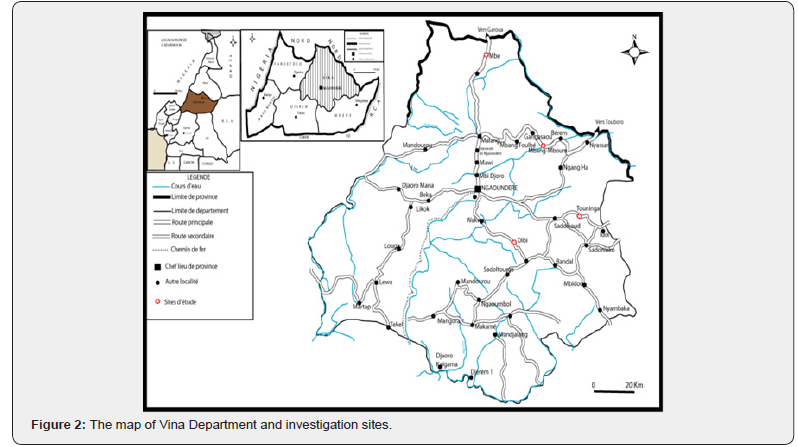
The diagram shows the location of the two territories in red dots. Below the city of Ngaoundéré, the last red dot is Dibi. The most dominant ethnic group is the Fulani (Fulbe), but the Mboum, Mambila, Laka, Mbororo, Dii, and southerners are also present. It lies on National Highway No. 1, Ngaoundéré/Meiganga-Yaoundé, and southwest of Ngaoundéré.
Mbé, the last red dot, is located 70 kilometers north of Ngaoundéré, past the escarpment. It is also on National Route 1, which connects Ngaoundéré to the North Region and extends to Kousseri in the Far North. The population of Mbé is predominantly Dii (large-scale yam farmers from the Adamawa Region). Several other ethnic groups from the Far North and North, South Cameroon, and neighboring countries (Nigeria, the Central African Republic, and Chad) also live there. After this justification and selection of sites, we will present the results and discuss them.
Results and Discussion
The United Nations Decade on Ecosystem Restoration, adopted by the United Nations General Assembly in March 2019 and covering the period 2021-2030, (FAO and UNEP). The 2019 Decade of Ecosystem Services is a global call to revitalize ecosystems and the services they provide. This decade aims to restore the health of habitats and the species that make up ecosystems in order to re-establish productive and resilient social and environmental systems in the face of current and projected pressures (global climate change, increasing pollution, habitat degradation and fragmentation, market pressures, among others).
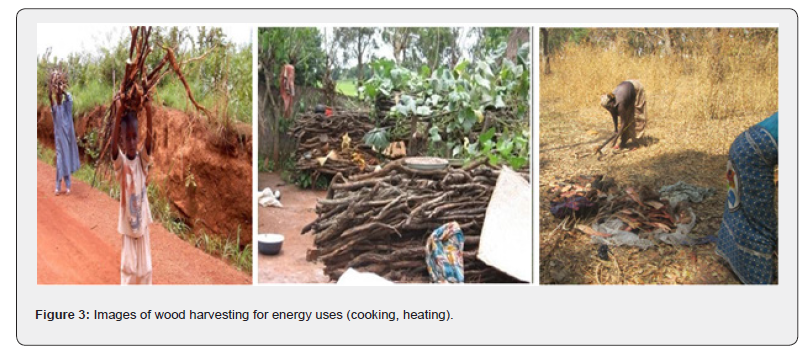
In rural areas surrounding the Vina region, wood remains the sole source of energy for all households. Vina is a crossroads between northern and southern Cameroon. When the population grows above the density that the local ecosystem can support, some villagers migrate and establish a new agricultural system in an area previously uncultivated, known locally as the pastures (Figure 3).
On the left, children carry bundles of wood for their parents; in the middle, bundles of wood are piled up (reserves) for cooking in the rainy season; on the right, these women collect wood using axes in the bush (Table 1).
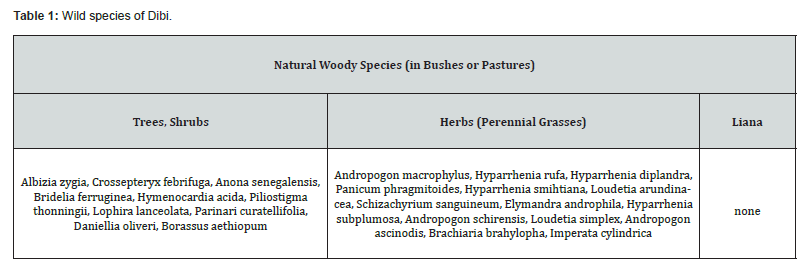

Source: Inventory August 2008/2009 This table shows that fruit trees and vegetable crops are abundant in the village. The latter are cultivated around and within the compounds. They are intended for consumption, but sometimes also for sale to increase household income. These are imported varieties. As in Mbang-Mboum, in Tourningal, thanks to the village’s abundant water supply, vegetable and fruit trees thrive.
Fires during the rainy season and slash-and-burn agriculture have transformed the department’s gallery forests into wooded and shrubby savannas dominated by Daniellia oliveri, Lophira lanceolata, and Terminalia sp. As these phenomena intensify, the first signs of degradation appear, with the presence of Harungana madagascariensi, Anona arenaria, Hymenocardia acida, and Piliostigma thonnigii, species typical of wooded and shrubby savannas. Grasses are found only in specific areas and only during the rainy season. They are found only along riverbanks in lowlying areas or in ravines inaccessible to animals. This is why cattle (photo 20) prefer tree leaves to grasses, which are less palatable.
This is why livestock farmers are forced to buy cottonseed, peanut, and corn bran meal despite their high prices. In contrast to the Dibi site we just described, where livestock farming is the main activity of the inhabitants, in Mbang-Mboum, agriculture predominates over livestock farming.
Wild species of Mbe
Although livestock farming predominates in this village, several varieties of cultivated plants are grown, including annual crops such as cereals, tubers, and vegetables. Woody plants, which are perennial species, grow naturally in the bush. The most common woody plants are Danielia sp., Lophira, Anona, Terminalia, Piliostigma sp., Hymenocardia, Albisia, and Borassus (see Table 2).
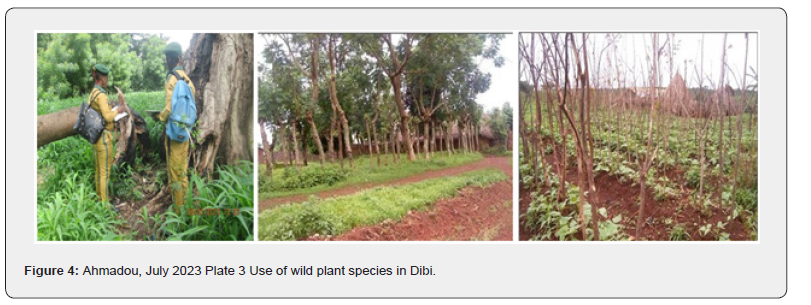
Plant species are used in various forms; as living hedges (Commiphera sp.) around concessions or as a means of delimiting plots (Figure 4).
This photo shows; on the left, trainees I supervise are taking inventory of plant species in the bush, the two images in the middle and on the right show that farmers use certain plant varieties for living hedges around concessions and fields and as stakes to support beans and yams respectively.
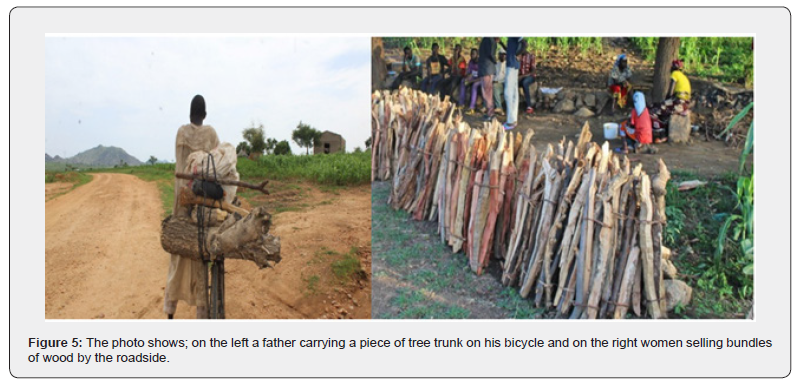
(Figure 5) This photo shows that these trees are being cut down in reserve areas that are also used as pastures. These areas are deteriorating, facilitating erosion and the loss of nutrients to the soil and vegetation.
Following intensive logging, the soil becomes bare and exposed [4]. This leads to drying and the formation of crusts. As a result, water has more difficulty penetrating the soil, which can cause surface runoff and erosion. All deforested areas observed in the field are exposed and will eventually dry out and erode. As a consequence of these uncontrolled land uses by herders and farmers, the soil becomes bare, exposed, dries out, and deteriorates.
Apart from its effects on evaporation/transpiration volume, vegetation cover exerts other extremely important influences on water distribution. Once rain has passed through the canopy, it can only partially penetrate the soil where it is stored as groundwater or water retention, from which it then flows slowly towards watercourses.
Depending on rainfall intensity and surface soil compaction, varying amounts of water can run off the land. Land management cannot control rainfall levels, but the growth, treatment, or deterioration of vegetation can significantly influence the compaction of the topsoil layers. When forest vegetation is allowed to develop naturally, it tends to create increasingly favorable environmental conditions for the formation of permeable soil [1]. Organic matter is initially deposited on the soil surface as litter. As this litter begins to decompose, the products of this organic decomposition rise to the topsoil layers, providing favorable conditions for bacteria and other plant or animal organisms that contribute to the development of soil structure. In addition, a network of rootlets, by penetrating the most superficial layers of the soil, ensures mechanical stability and creates, when they die and rot, myriads of underground channels.
This is how, after a certain time, the forest cover creates optimal conditions for water penetration and storage. Conversely, the removal of vegetation – even if it causes no mechanical disturbance – leads, through the changes it brings about, to a more or less pronounced degradation.
The removal of the canopy exposes the dead cover and humus to increased oxidation from rain and wind erosion. The progressive deterioration of the microfauna and microflora leads to the loss of active roots without their replacement, and compaction due to rain all contribute to hardening the surface layers until, at the critical stage of deterioration [2], surface runoff begins [5]. If vegetation is not re-established at this point, a new cycle of progressive deterioration begins [6]. Surface runoff displaces fine particles, which then enter the interstices of the upper soil; this results in decreased porosity, leading to increased surface runoff, and so on. This cycle eventually reaches a stable equilibrium, corresponding, for the receiving basin, to low water infiltration and storage capacity as well as excessive surface runoff rates. The streams swell during periods of heavy rainfall, while they are partially dry between periods.
This degradation of pastures, exacerbated by mechanical soil compaction due to animal trampling and the pressure of heavy farming equipment, depletes the pastures (Milo R 2018). In particular, on land used for grazing or rangeland, animal trampling can play a significant role in the deterioration of a catchment area. Human trampling can also have a similar effect in densely populated areas.
From the above, it can be deduced that, overall, the management and protection of a catchment area aims to prevent the causes of forest cover deterioration so as not to reach the critical stage of degradation. In some regions, on relatively porous soils and with low rainfall, it is possible to harvest vegetation quite intensively without causing serious damage. In other regions, with heavy rainfall and on easily degraded soils, complete preservation of the vegetation may be necessary [7-17].
Conclusion
In summary, we can make a few observations on the effects of excessive logging (vegetation) on soil water supply and stream flow in the Vina department. This water consumption is generally a significant factor for livestock farming in the Adamawa region and indeed throughout the country. A lack of vegetation can lead to low agricultural yields and insufficient water for livestock. However, vegetation can have a very significant impact on land stabilization and stream regulation. Consequently, the primary objective of land management is to regulate plant resources, and to achieve land stabilization, it will be necessary to focus on maintaining the densest possible vegetation cover. Conversely, if the aim is to maximize water availability while maintaining land stability and stream regulation, those developing the region should focus on maintaining vegetation at the minimum density necessary to prevent exceeding the critical level of degradation.
According to reports from the Ministry of Tourism, ecotourism in Cameroon is a rapidly growing and relatively important sector. While essential, the country has not yet fully exploited its potential. In line with the objectives of Vision 2035, the focus will be on establishing an institutional and regulatory framework conducive to promoting tourism and improving the quality of the tourism offering. To achieve this, it is necessary to: 1) strengthen capacities to deepen knowledge of tourist areas (including new directions such as ecotourism and cultural tourism) where the country has a comparative advantage; 2) modernize tourist sites and areas; 3) develop tourist sites; and 4) promote Cameroon as an ecotourism destination.
Good to read
240% of the world’s population (up to 2.8 billion people) now live in areas where water is scarce (UN-Water) 325 million people in Africa live in arid regions, almost half the continent’s population (UNECE) 135 million people are at risk of being displaced by desertification in the coming decades due to water and food shortages (World Humanitarian Forum) 2 billion people worldwide depend on 500 million smallholder farms for their food security (IFAD) 25% of the world’s land is severely degraded (FAO) 52% of land used for agriculture is moderately or severely affected by land degradation (United Nations) 2 billion hectares of degraded land worldwide (an area larger than South America) can have their land rehabilitated and their forests restored. (WRI) 3 billion tons of carbon per year can potentially be stored in soils by restoring degraded land (study conducted by Professor Ratta Lal, Ohio State University)
About the CNULCD
The United Nations Convention to Combat Desertification (UNCCD) The Convention on Sustainable Land Management (CSLM) is the only legally binding international agreement on good land management. It helps communities and countries create wealth and ensure food security, access to clean water, and energy through sustainable land management. Through partnerships, the 197 Parties to the Convention have also established robust systems to proactively manage drought risks. Sustainable land management based on sound policy and science helps integrate and accelerate the achievement of the Sustainable Development Goals, strengthen resilience to climate change, and prevent biodiversity loss.
About the ELD
Economics of Land Degradation Initiative (ELD) is a global initiative that integrates the values of land and its ecosystem services into decision-making to inform, promote, and scale up land solutions for transformative change. Established in 2011 by UNCCD, the EU, and Germany, and hosted by GIZ, ELD has informed better land decisions with over 40 case studies in more than 30 countries and raised global awareness with numerous landmark reports.
The contribution of soil evaporation in 2025: Actual evapotranspiration decreased during the experiment from 100% (bare soil) to 94%. This is the transpiration of plants, which allows water vapor to escape from plants into the atmosphere. In hydrology, the term evapotranspiration is used
References
- Tchotsoua M (2008) From spatial planning to aid for controlled development in tropical environments. The case of the Adamawa Highlands in Cameroon. Paris, Editions Manuscrit Université, p. 249.
- Hurault J (1975a) The transformation of the physical environment under the effect of overgrazing on the high plateaus of Adamaoua, Paris, St –Mandé, IGN Photo interpretation study, 7: 218.
- Needham P (2010) Water and the Development of the Concept of Chemical Substance. In: T Tvedt, T Oestigaard (Eds.), A History of Water. Vol. 4: The Ideas of Water from Antiquity to Modern Times, IB Tauris, London.
- Ntoupka M (1999) Impacts of anthropogenic disturbances (grazing, fire and logging) on the dynamics of the wooded savanna in the northern Sudanian-Sahelian zone. The 2024 Report. The United Nations Biodiversity Report revealed that approximately one million animal and plant species are currently threatened.
- Hurault J (1975b) The transformation of the physical environment under the effect of overgrazing on the plateaus of Adamaoua, Paris, St-Mandé, IGN (Photo-interpretation study 7: 218.
- Hurault J (1975c) Overgrazing and transformation of the physical environment: in Plant Formations, Surface Hydrology, Geomorphology: the example of the high plateaus of Adamaoua (Cameroon). Photointerpretation study no. 7, National Geographic Institute, Paris, p. 218.
- National Institute of Statistics of Cameroon, INS (2018) Second General Business Census (RGE) 2016, Final Report. Yaoundé, Cameroon.
- Ph Miahle, J Piot (1979) Upper Volta, trials of preparation and planting of bare-root Eucalyptus camaldulensis : Part 1 , BOIS & Forets Des Tropiques Vol. 187.
- F Monnier, J Piot (1966) Grazing problems in Adamawa (Cameroon). Part 2, bois & Forets Des Tropiques: Vol. 98.
- J Piot (1966) Soil stabilization trials using grasses in the Adamawa region, bois & Forets Des Tropiques: Vol. 106.
- Narendra P. Sharma et al. (1996) Sustainable Water Resources Management in Africa: Challenges and Opportunities. Technical Report No. 331F, Africa Region. Office J5-170, World Bank, 1818 H Street NW, Washington, DC 20433, p. 52.
- NEPAD (2004) Promoting sustainable management of natural resources and environmental protection; Report of the symposium of African countries; Algiers. NEPAD Action Plan.
13. UN Report 2024: Investing in healthy land to reduce the billion-dollar costs of human-caused droughts.
- Bar-On YM, Phillips R, Milo R (2018.) The biomass distribution on Earth. Proceedings of the National Academy of Sciences of the United States of America 115(25): 6506-6511.
- https://www.worldfuturecouncil.org/wp-content/uploads/2017/08/FPA-Brochures-2017_FRENCH.pdf
- Third General Population and Housing Census (2010) Central Bureau of Censuses and Population Studies of Cameroon (BUCREP).
- R Peltier, R Nkoukam (2006) Training master plan for the ENEF of Mbalmayo (Cameroon), MINFOF/CIRAD, p. 4.

























