



 JFSCI Home



Abstract
Microbial fingerprinting is an emerging frontier in forensic science. It explores how the unique microbial assemblages inhabiting humans, objects,and environments can act as traceable biological signatures, linking individuals or materials to specific locations or activities. These microbial“fingerprints” can serve as trace evidence, linking individuals or locations in forensic investigations. Microbial forensics, by comparison, adds an ecological layer to evidence interpretation by exploring the unique microbial footprints people leave on debris, soil, and everyday surfaces. These signatures also linger within familiar biological traces saliva on a cup, sweat on clothing, flakes of dandruff on fabric, or the microbial residue accumulating on personal accessories turning even the smallest touchpoint into a potential source of forensic insight.
Everyone’s body and surface have a unique microbiome, which frequently exists even in the absence or degradation of human DNA. With advances in molecular biology, next-generation sequencing (NGS), and metagenomic analysis, this concept has evolved from theory into a practical forensic tool. Microbial traces from skin, saliva, or environmental residues can connect suspects to items, identify body fluids, or estimate post-mortem intervals (PMI). Determining time since death and geographic origin is further aided by the microbial growth on decomposing remains and soil microbiomes studying in different time frames.
While computational diversity analyses provide extra avenues for comparison, methods like 16S rRNA and ITS barcoding, shotgun metagenomics, and machine learning enhance taxonomic resolution and predictive accuracy. Despite its great potential, microbial fingerprinting faces challenges such as the natural variability of microbial communities, limited global reference databases, and a lack of standardised laboratory and analytical protocols with legal and ethical issues surrounding privacy and evidence admissibility. With proper validation and ethical oversight, microbial fingerprinting could become a vital tool to traditional forensic tools like DNA profiling.
Keywords: Microbial fingerprinting; Metagenomics; Next-generation sequencing; Post-mortem interval; Crime Scene Investigation; Microbial forensics
Abbreviations: ITS barcoding: Internal Transcribed Spacer; NGS: Next-Generation Sequencing; FMD: Forensic Microbiome Database; rRNA: Ribosomal Ribonucleic Acid; PMI: Post Mortem Interval; PCA: Principal Component Analysis; PCoA: Principal Coordinate Analysis; QIIME 2: Quantitative Insights into Microbial Ecology version 2; MEGAN: MEtaGenome Analyzer; ALT: Alanine Transaminase (Alanine Aminotransferase); BMI: Body Mass Index; CVD: Cardiovascular Disease; CODIS: Combined DNA Index System; WGS: Whole Genome Sequencin ; SNPs: Single- Nucleotide Polymorphisms; STR: Short Tandem Repeat; ISFG: International Society for Forensic Genetics; AI: Artificial Intelligence; XAI:Explainable Artificial Intelligence
Introduction
Microbial fingerprinting refers to the systematic analysis of unique microbial community patterns associated with humans or their environments, where variations in microbial taxa, genetic markers, and community structure serve as biological “signatures” that can link individuals, objects, or locations. The capacity to investigate microbial communities in an assortment of enormous habitats has been impacted by technological advances in nextgeneration sequencing (NGS), metagenomics, and bioinformatics, creating new forensic opportunities [1].
In essence, microbial fingerprints extend forensic identification beyond human DNA, harnessing the individuality, persistence, and ecological specificity of microbes to infer relationships between people and the spaces or materials they interact with. Microbial fingerprinting in forensics reflects broader technological evolution within the life sciences. Classical microbiology—culturing microorganisms, analyzing colony morphology, and performing biochemical tests—was the backbone for initial forensic biological studies. These methods provided valuable insights but captured only a fraction of the microbial world, as less than 1% of species are culturable in the laboratory [2].
Microbes as Biological Signatures
Microbes function as biological identifiers because they display three key forensic characteristics: individuality, stability, and transferability. Each human body harbours trillions of microbes across sites such as the skin, mouth, gut, and genital tract—each niche shaped by host genetics, physiology, lifestyle, and environment [1,3]. Studies and research show till now in this field that no two individuals share identical microbial compositions, not even identical twins, making these microbial communities highly distinctive. Among these, the skin microbiome has drawn forensic interest because of its constant exposure to the environment, direct contact with surfaces, and relative temporal stability. Dominated by genera such as Staphylococcus, Corynebacterium, and Cutibacterium, the skin’s microbial layer acts as a dynamic yet identifiable extension of the individual [4]. Simple but powerful experiments were the first to show that these microbes could be used as personal biological markers.
Fierer et al. demonstrated that a person’s computer keyboard and the microbial composition of their hands could be comparable, demonstrating that these microscopic inhabitants transmit leaving identifiable traces that resemble invisible fingerprints [5]. Building on this foundation, more recent metagenomic studies have provided greater resolution and confidence in this concept. For instance, a study by Ying et al. found nearly 90% identification accuracy through the application of a k-mer-based method to find individual-specific microbial DNA fingerprints that remained stable over time and across human body sites [6]. Likewise, transfer and persistence studies revealed that skin-associated microbes could survive on fabrics and other surfaces for several days, reinforcing their potential value as enduring forensic evidence [7].
Microbial communities, on the other hand, also mirror their surroundings. Local chemistry, climate, and human presence all influence soil and dust microbiomes in predictable ways, creating “microbial maps” that are specific to a given area and can be used for geolocation [8,9]. This strategy is supported by the Forensic Microbiome Database (FMD), which gathers global 16S rRNA datasets for cross-comparison and further helps in predicting the geographical origin of samples, comparing microbial communities across body sites, inferring relevant metadata of host characteristics or environmental context (such as health status, age, or location), and providing a comprehensive reference framework for forensic applications involving microbial attribution and biogeographical profiling.
The present review synthesizes a wide range of peerreviewed studies, systematically examining the development, methodologies, and forensic applications of microbial fingerprinting. By comparing findings across diverse research papers, this review evaluates how microbial community signatures have been characterized, the technologies employed to detect them, and the contexts in which they have been applied in forensic science to provides a structured examination of key themes including microbial diversity, methodological advances, human identification potential, postmortem interval estimation, environmental trace analysis, reliability factors, and emerging challenges.
Microbial Diversity and Sources
Human-Associated Microbiomes
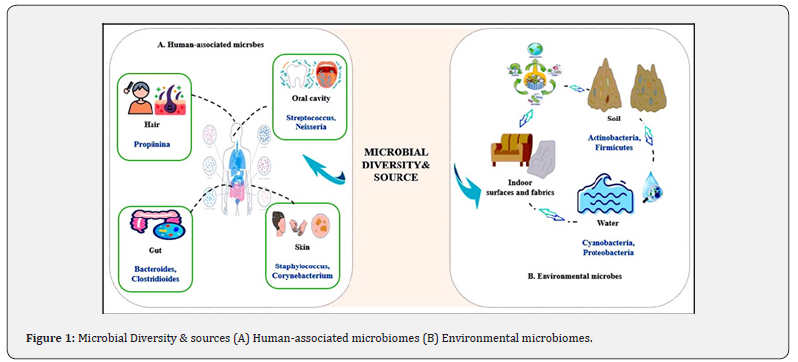
Human-associated microbiomes colonise distinct anatomical sites—skin, oral cavity, gastrointestinal tract, nasal passages, vagina, and hair. Each niche offers unique physicochemical conditions shaping community structure [3]. The skin microbiome, dominated by Staphylococcus, Corynebacterium, and Cutibacterium species, is a key forensic focus because it transfers easily to surfaces. Fierer et al. first showed that microbial communities from a person’s hands could match those on keyboards they had used, demonstrating individuality and transferability [10]. Later, Zheng et al. achieved 89.8 % donoridentification accuracy by analysing individual-specific k-mer patterns from skin metagenomes, highlighting the discriminatory potential of microbial DNA [11].
The oral microbiome, composed of genera such as Streptococcus and Neisseria, often persists on drinking vessels, cigarettes, or bite marks, allowing linkage to persons [12]. The vaginal and seminal microbiomes also exhibit diagnostic value: Lactobacillus-dominant vaginal flora and characteristic semen taxa can discriminate body-fluid types, useful in sexual-assault cases [13]. Similarly, Swayambhu et al. [14] explored microbial stain analysis in simulated crime scenes, showing that taxonomic shifts and functional gene variations can reveal not only the type of biological material but also the environmental conditions of deposition. Gut microbiota, although less frequently encountered directly at crime scenes, offer immense value in postmortem studies and Estimation of PMI. After death, microbial proliferation in the gut and internal organs adheres to predictable temporal patterns, functioning as biological clocks for estimating the time since death [12].
Environmental Microbiomes
Environmental microbiomes represent microbial communities found in natural and built environments such as soil, water, air, and indoor surfaces. These communities vary substantially across regions, climates, and substrates, influenced by physicochemical parameters like temperature, humidity, pH, and organic content [16] [15]. Soil microbiomes are especially valuable in forensic geolocation. The Forensic Microbiome Database (FMD) established by Díez López et al. aggregates publicly available 16S rRNA datasets from diverse global habitats to enable comparative analysis. By mapping taxonomic and functional diversity patterns across latitudes and soil types, the FMD allows forensic analysts to estimate the geographical provenance of soil or dust samples recovered from evidence [8].
Aquatic microbiomes also possess forensic significance, especially in instances of drowning or when submerged remains are found. The bacterial communities in freshwater and marine environments differ in composition and can provide information regarding the location or time frame of submersion. Airborne and indoor microbiomes, affected by the presence of humans, ventilation, and surface materials, has been investigated to associate individuals with specific spaces or home environments [3]. Research indicates that the microbial composition of residences or workplaces mirrors their inhabitants, with specific bacterial taxa identifiable on furniture, walls, and floors. This mutual exchange creates a bidirectional microbial signature, offering a novel line of evidence for situational reconstruction. Figure 1 shows the microbial diversity and its sources.
Techniques and Methodologies in Microbial Fingerprinting
Culture-Dependent Techniques
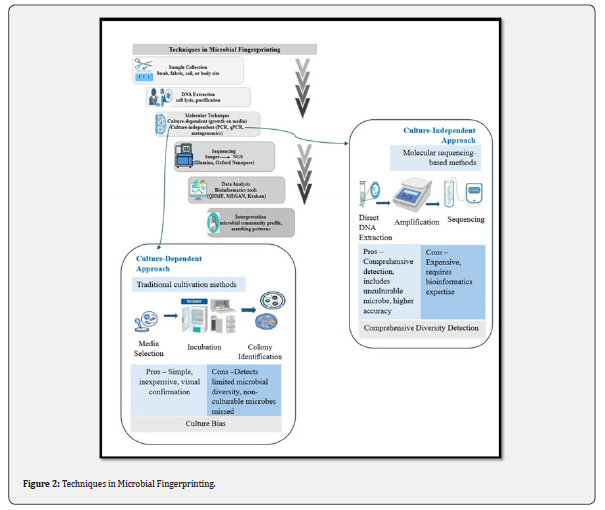
Traditional culture-based methods involve isolating microbes on selective media and identifying them through morphology or biochemical assays. Although foundational, such methods capture only a small fraction of microbial diversity—typically < 1 % of species are culturable [2]-and thus have limited forensic value except in pathogen or contamination cases.
Culture-Independent Molecular Techniques
PCR-Based Fingerprinting
Polymerase chain reaction (PCR) enabled culture-independent profiling of microbial communities. Techniques such as Random Amplified Polymorphic DNA (RAPD), Amplified rDNA Restriction Analysis (ARDRA), Terminal Restriction Fragment Length Polymorphism (T-RFLP), Denaturing Gradient Gel Electrophoresis (DGGE), Enterobacterial Repetitive Intergenic Consensus (ERIC)- PCR, and BOX-level differentiation by amplifying variable genomic regions [16]. These methods are rapid and inexpensive but offer limited taxonomic resolution.
DNA Sequencing Approaches
The advent of sequencing transformed microbial fingerprinting. 16S rRNA, 18S rRNA, and ITS sequencing identify with bacterial or fungal taxa based on conserved ribosomal genes. Shotgun metagenomics analyses all DNA in a sample, providing species- and strain-level resolution plus functional insights. Metatranscriptomics, metaproteomics, and metabolomics extend this to RNA, proteins, and metabolites, revealing functional activity rather than mere presence [3]. Zheng et al. exemplified the power of metagenomics by identifying individual-specific microbial DNA fingerprint stable across time and body sites—achieving almost 90 % classification accuracy [11].
Next-Generation Sequencing (NGS) Platforms
Illumina sequencing dominates microbial forensics for its accuracy and depth, while long-read technologies like Oxford Nanopore and PacBio enable real-time field analysis and genome assembly [17]. Portable sequencers such as MinION offer on-site microbial profiling, a step toward operational deployment.
Bioinformatics and Statistical Tools
Post-sequencing, community analysis pipelines—QIIME 2, Mothur, MEGAN—quantify alpha- and beta-diversity, cluster taxa, and visualise relationships via PCA or PCoA plots. Machinelearning algorithms (e.g., random forests, neural networks) increasingly classify sample types, predict PMI, or identify donors [18]. These computational advances have converted descriptive microbiology into predictive forensic analytics. Various techniques in microbial fingerprinting are shown in Figure 2.
Factors Influencing Microbial Fingerprinting
The accuracy of microbial fingerprinting depends on biological, technical, and environmental stability. Microbial communities are dynamic systems that respond rapidly to external pressures. Temperature, humidity, UV exposure, and substrate type all influence microbial persistence and diversity [19]. Sampling and storage conditions strongly determine reliability. Improper swabbing, delayed preservation, or use of non-sterile tools may introduce contamination or DNA degradation. Swayambhu et al. reported that microbial profiles from fabric substrates remained distinguishable after 72 hours when refrigerated but deteriorated under ambient conditions [20]. DNA quality and inhibitors— for instance, humic acids in soil or detergents on fabrics—can interfere with amplification, particularly in low-biomass samples.
Advanced extraction kits and internal controls are therefore essential. Bioinformatics pipelines also influence reproducibility. A single dataset may produce distinct community profiles depending on differences in statistical algorithms, clustering thresholds, or database selection [18]. This emphasizes the necessity of standard reference workflows and metadata reporting protocols, equivalent to the ones encountered during the analysis of human DNA. Lack of standardization across sampling, sequencing, and analytical methods impedes comparison between laboratories. Environmental sensitivity, temperature, humidity, and surface material can distort profiles. Interpretation complexity: distinguishing transfer from background flora requires expert statistical modelling. Legal admissibility remains uncertain; microbial evidence must meet Daubert/Frye standards. Privacy and ethical issues surrounding personal microbiome data [21].
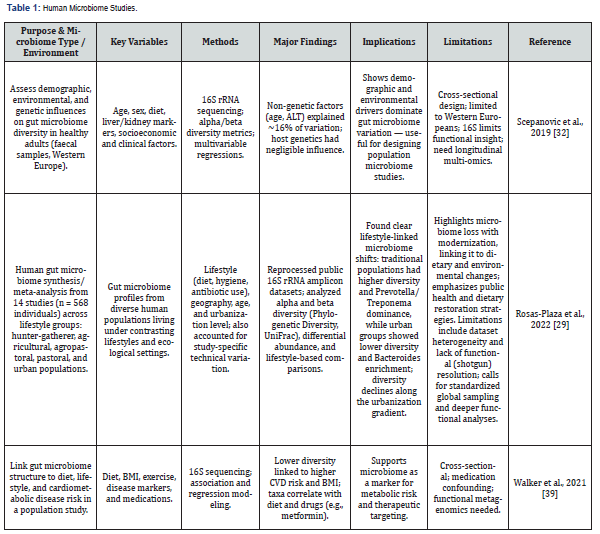
Finally, temporal variation in a person’s microbiome introduces biological noise. Factors such as diet change, antibiotic use, or illness can transiently alter microbial composition, potentially confusing longitudinal comparisons [3]. Thus, reliability rests on standardised protocols, careful interpretation, and crossvalidation against environmental control. Table 1 presents a concise overview of key studies on human microbiome studies.
Forensic Applications of Microbial Fingerprinting
Microbial fingerprinting has emerged as a transformative approach in forensic science, utilising the unique individuality and ecological specificity of microbiomes as investigative evidence. These microbial signatures can reveal crucial information such as the biological source of a sample, the postmortem interval (PMI), the type of body fluid, or even the geographical origin of trace materials shown in Figure 3. This approach serves as a complement—and in certain contexts, a superior alternativeto conventional DNA profiling, particularly when human DNA is degraded, mixed, or absent [22]. Table 2 presents a concise overview of key studies on forensic microbiome studies.
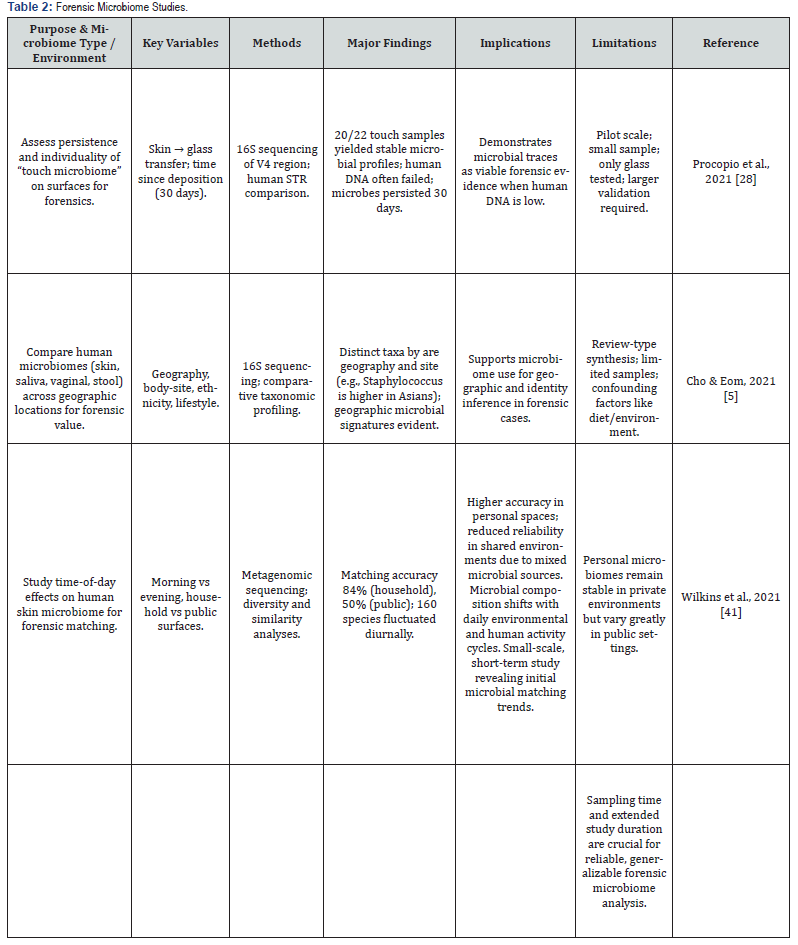
Human Identification
Microbial fingerprinting provides an alternative approach to human identification when conventional DNA evidence is compromised. Each individual harbours a unique microbial community that functions as a biological signature. The skin microbiome has proven valuable for linking individuals to handled objects. Fierer et al. demonstrated that bacterial communities on hands could be traced to personal devices such as keyboards and computer mice with high accuracy [10]. Microbial transfer from skin to surfaces-like phones, doorknobs, or fabrics-can persist for several days, allowing associations even when epithelial DNA is degraded [12]. Furthermore, stable microbial communities in the nasal cavity, mouth, and gut contribute to unique microbial signatures that are influenced by diet, lifestyle, and immune factors. Eventually, these could become the basis for microbial databases that are like genetic CODIS systems [16]. Interpersonal microbial exchange can elucidate previous interactions among individuals. Research indicates that cohabiting partners and family members exhibit specific subsets of their microbiota, thereby facilitating probabilistic inferences regarding contact or cohabitation-an element that is significant in assault or contactbased investigations.
Estimation of Post-Mortem Interval (PMI)
One of the most promising applications of microbial fingerprinting lies in PMI estimation. After death, decomposition triggers a predictable microbial succession in internal organs, skin, and surrounding soil. These shifts create a temporal pattern that functions as a biological clock [23]. Early decomposition stages are typically dominated by facultative anaerobes such as Enterobacteriaceae and Clostridium, while later phases involve soil and saprophytic species. Machine learning models trained on 16S rRNA microbial succession data have achieved mean absolute errors of less than ±2 days in controlled studies. Integrating environmental parameters such as soil pH, humidity, and temperature further enhances temporal resolution [22]. Multisite sampling-combining data from organs like the liver, brain, and nasal cavity-may offer a standardised and objective protocol for PMI estimation.
Linking Suspects to Objects or Environments
Microbial fingerprinting excels at establishing associative evidence-linking individuals to objects or locations. Every physical contact transfer microbial material, extending Locard’s principle (“every contact leaves a trace”) to the microbial domain. Skin microbiota can persist on surfaces like fabrics, phones, or doorknobs for several days. Similarly, environmental microbial signatures, such as soil or dust, can associate suspects with specific regions [9]. The Forensic Microbiome Database (FMD) enables comparison of unknown microbial samples with regional references. In this regard, desert soils that are full of Actinobacteria are very different from tropical soils which are abundant of Proteobacteria or Acidobacteria. This makes it possible to get a rough idea of where these organisms belong. Additionally, shared microbial taxa between individuals can provide corroborative evidence in sexual assault or contact-based cases [13].
Determination of Body-Fluid Type
Microbial fingerprinting also plays a vital role in identifying the origin of body fluids—saliva, semen, vaginal fluid, menstrual blood, or urine—at crime scenes. Traditional biochemical assays (e.g., acid phosphatase for semen, amylase for saliva) often degrade or yield false positives, whereas microbial profiles provide a more resilient and discriminatory signature. In contrast, microbial profiles offer a more consistent and distinctive biological signature. Each body fluid harbors a characteristic microbial community — for instance, saliva is rich in Streptococcus and Prevotella, vaginal fluid predominantly contains Lactobacillus, semen is characterized by Finegoldia and Corynebacterium, while menstrual blood features a dynamic mix of anaerobic taxa that vary over time. Swayambhu et al. employed full-length 16S rRNA sequencing to create a random forest classifier that got an impressive F1 accuracy score of 0.89 across six different body fluids. The model’s accuracy was impressive, even in mixed and fabric-based samples like cotton and denim. It demonstrates that it can endure stress from the environment [16].
Temporal and Environmental Inference
Microbial composition can reveal when or where contact occurred. De Alcaraz-Fossoul proposed using microbial community succession within fingerprints to estimate time since deposition, effectively turning microbial dynamics into a “biological clock” [24]. Similarly, soil or dust microbiomes may indicate regional origin, aiding geolocation [9].
Bioterrorism and Pathogen Tracing
Microbial fingerprinting also has applications in pathogen attribution and biosecurity. Whole genome sequencing (WGS) and metagenomic surveillance can differentiate natural microbial strains from engineered ones, tracing origins through genetic markers such as single-nucleotide polymorphisms (SNPs) or plasmid sequences [25]. This capability aids in investigating bioterrorism, foodborne outbreaks, and environmental contamination. Emerging areas include built-environment microbiomes that reflect human occupancy patterns [22], microbial forensics in wildlife and environmental crimes, and multi-omics integration with artificial intelligence to enhance pattern recognition and evidentiary interpretation [16].
Microbial fingerprinting has demonstrated broad forensic utility across multiple evidence types ranging from human identification and PMI estimation to body fluid classification and geolocation. Its power lies in the stability, individuality, and transferability of microbial communities, which persist even when human DNA degrades. Though challenges remain in standardisation and legal validation, ongoing advances in sequencing and computational methods position microbial fingerprinting as a pivotal addition to forensic science-capable of revealing not only who and what, but also where and when.
Integration with Other Forensic Tools
Combining human and microbial DNA analysis increases identification accuracy, especially in trace evidence. When STR profiles are partial, microbial sequences can reinforce association probability [26]. Metabolomics integrated with microbial data provides biochemical insight into post-mortem or environmental conditions—metabolite shifts coupled with microbial succession improve PMI estimation [12]. Artificial intelligence and machinelearning algorithms now synthesise multi-omics datasets, learning correlations between microbial signatures, environmental metadata, and temporal patterns [18]. Predictive modelling could eventually automate suspect–scene matching. Moreover, microbial fingerprinting complements chemical and isotopic analyses used in geolocation, forming a holistic “ecological trace” that links individuals to environments more comprehensively than any single method. Figure 4 shows the advantage of microbial fingerprinting with other forensic tools.
Ethical, Legal, and Privacy Considerations
Microbiome data raises profound ethical and legal questions. Because microbial communities encode information about health, lifestyle, and geography, their misuse could compromise personal privacy [9]. Unlike human DNA, which is protected under geneticinformation laws in many jurisdictions, microbial DNA currently occupies a regulatory grey zone. From a legal perspective, microbial evidence must also satisfy established standards of scientific reliability, such as the Daubert or Frye criteria. This requires rigorous validation studies, transparent methodologies, and clearly defined error rates before such evidence can be deemed admissible in court [22] and strict ethical standards must be followed when collecting microbiome samples to guarantee informed consent, data anonymization, and safe storage. To avoid abuse or discriminatory profiling, any databases designed for forensic comparison should adhere to data protection regulations.
Future Directions
The next decade will likely see microbial fingerprinting evolve from experimental research into routine forensic practice shown in Figure 5. Standardisation and Validation for microbial evidence to be admissible in court, reproducible laboratory and computational standards are essential. Standardised sampling kits validated DNA extraction and amplification protocols, and benchmark bioinformatics pipelines with clear performance metrics (sensitivity, specificity, contamination control) are required. Global Microbial Databases on one of the primary needs is the development of standardised, population-specific microbial databases. Current repositories like the Forensic Microbiome Database (FMD) are valuable but geographically limited [9].
The next step is creating global repositories like CODIS for DNA, cataloguing human and environmental microbiomes (from skin, saliva, soil, or water) with contextual metadata such as pH, humidity, and temperature. Integrating these with machine learning models could enable automated body fluid identification, geolocation inference, and suspect-environment linking, while international organisations like ISFG can ensure data standardisation and privacy protection. Portable Sequencing and On-Site Analysis of On-site forensic microbiome analysis might experience a revolution due to the increasing miniaturization and portability of sequencing technologies. Real-time, field-deployable sequencing of microbial communities from small sample volumes is currently feasible by using devices like the Oxford Nanopore MinION and Flongle [25,26].
Integration into Multi-Omics Frameworks combining genomics, transcriptomics, metabolomics, and proteomics will provide deeper insight into activity patterns and PMI. AI-Based Interpretation will play a central role in translating complex microbial data into interpretable forensic conclusions. Machine learning models such as random forests, support vector machines, and deep neural networks can classify microbial communities across multiple evidence types and generate probabilistic match scores [18]. The next step involves developing explainable AI (XAI) frameworks that provide transparent reasoning for each prediction—essential for courtroom admissibility. Such models can integrate microbial data with DNA, chemical, and contextual metadata to produce unified likelihood ratios consistent with forensic reporting standards. Legal and Ethical Infrastructure progress in policy and jurisprudence will ensure that microbial evidence is used responsibly and admissibly.
Conclusion
Microbial fingerprinting represents one of the most promising frontiers in modern forensic science—bridging molecular biology, ecology, and criminal investigation. Over the past decade, forensic research has evolved from descriptive microbiome studies to precision-based sequencing analyses capable of identifying body fluids, estimating postmortem intervals, and linking individuals to objects or environments. This advancement signifies a paradigm shift in forensic science, transforming the way trace biological evidence is interpreted and expanding investigative possibilities beyond traditional limits.
Fundamentally, microbial fingerprinting utilizes the advantages of the uniqueness, adaptability, and durability of microbial communities. A distinct microbial community, comprising bacteria, fungi, and viruses, is present in every individual and environment, reflecting physiological, ecological, and behavioural histories. Investigators can reconstruct interactions and events from minimal biological traces since, unlike human DNA, these microbial signatures can remain on skin, fabrics, or surfaces even after degradation. Further demonstrating the exceptional stability
Methodologically, microbial fingerprinting has advanced in parallel with sequencing and computational innovation. The shift from culture-based assays to next-generation sequencing (NGS), whole-genome sequencing (WGS), and metagenomic analysis has enabled comprehensive profiling of microbial ecosystems. Portable sequencing devices such as the Oxford Nanopore MinION now permit field-based applications, transforming crime-scene processing into real-time, data-driven workflows. Additionally, artificial intelligence (AI) and bioinformatics pipelines translate complex microbial datasets into interpretable forensic insights— supporting probabilistic reporting, cross-sample comparison, and predictive classification aligned with evidentiary standards.
In practical application, microbial fingerprinting contributes to multiple forensic domains including, human identification, body fluid differentiation, postmortem interval estimation, geolocation inference, pathogen tracing and bioterrorism investigation. Despite its promise, microbial fingerprinting still faces key challenges before it can be routinely applied in forensic work. The absence of standardized protocols for sampling, sequencing, and analysis often leads to variable results between laboratories, while the lack of comprehensive reference databases limits reliable cross-case comparison and validation.
Legal and ethical concerns add another layer of complexity. Unlike human DNA profiles, microbiome data can inadvertently disclose sensitive details about health or lifestyle. Microbial fingerprinting exemplifies the convergence of technology and biology in the pursuit of justice. It offers the ability to interpret the invisible—to trace interactions, environments, and temporal dynamics through the microbial signatures that surround and inhabit us. As methodological precision and ethical frameworks mature, microbial fingerprinting will evolve from an experimental innovation into a cornerstone of forensic identification— transforming crime reconstruction, strengthening evidentiary accuracy, and reshaping our understanding of biological individuality in forensic science.
References
- Zhang X, Liu Y, Simayijiang H, Hu X, Yan W (2023) The forensic potential of microbiome variability across human body sites. Frontiers in Genetics 14: 116-130.
- Frontiers (2020) Standardization and reproducibility challenges in forensic microbiome studies. Frontiers in Forensic Science 1: 22–31.
- Ahannach S, Mandal A, Verstraelen H (2023) Human microbiomes as unique identifiers: Forensic potential and ethical implications. Frontiers in Microbiology 14: 113-128.
- Dass M, Abbai NS, Ghai M (2025) The human skin microbiome: factors affecting individuality and application in forensic investigations. International Journal of Legal Medicine.
- Fierer N, Lauber CL, Zhou N, McDonald D, Costello EK, et al. (2010) Forensic identification using skin bacterial communities. Proceedings of the National Academy of Sciences of the United States of America 107(14): 6477-6481.
- Ying J, Wang Y, Chen L (2022) Individual identification based on skin metagenomic signatures. Forensic Science International: Genetics 58: 102701.
- Genes MA (2024) Persistence of human skin microbiota on textile substrates: Implications for forensic investigations. Forensic Microbiology 6(1): 1-14.
- Díez López C, Rodríguez-Pérez H, Villaverde-López MI, Saíz-Sánchez C (2021) The Forensic Microbiome Database (FMD): Expanding microbial data for geolocation and trace evidence. Forensic Science International 8: 101796.
- Díez López C, Vidaki A, Kayser M (2022) Integrating the human microbiome in the forensic toolkit: Current bottlenecks and future solutions. Forensic Sci Int Genet 56: 102627.
- Fierer N, Lauber CL, Zhou N, McDonald D, Costello EK, et al. (2010) Forensic identification using skin bacterial communities. Proceedings of the National Academy of Sciences of the United States of America 107(14): 6477-6481.
- Zheng Y, Shi J, Chen Q, Deng C, Yang F, et al. (2022) Identifying individual-specific microbial DNA fingerprints from skin microbiomes. Frontiers in Microbiology 13: 960043.
- Cason AL, Murch RS, Budowle B (2020) Microbial forensics: A scientific approach to evidence attribution. Forensic Science International: Genetics 46: 102261.
- Swayambhu G, Arora P, Kumar R (2025) Body-fluid microbial profiling in sexual-assault investigations: Advances and validation needs. Frontiers in Forensic Science 7: 117-135.
- Swayambhu M, Kümmerli R, Arora N (2023) Microbiome-based stain analyses in crime scenes. Applied and Environmental Microbiology 89(1): e0132522.
- Hampton-Marcell JT, Larsen P, Gilbert JA (2017) The human microbiome and the built environment: An emerging interface. Frontiers in Microbiology 8: 234.
- Swayambhu M, Arora N, Kümmerli R (2025) Standardizing microbiome pipelines for forensic body fluid identification. Applied and Environmental Microbiology 91(5): e0187124.
- Meyers E, Singh A, Prakash O (2025) Portable sequencing technologies in microbial forensics: Opportunities and limitations. Analytical and Bioanalytical Chemistry 415: 4415-44130.
- Arora P, Swayambhu G, Kumar R (2025) Artificial intelligence and machine learning in microbial forensics: Current applications and future prospects. Forensic Science International: Genetics 62: 102920.
- Wilkins D, Leung MHY, Lee PKH (2021) Temporal variation in household surface microbiota and forensic implications. Microbial Ecology 82(2): 289-303.
- Swayambhu G, Arora P, Kumar R (2023) Persistence of body-site microbiomes on textile substrates for forensic identification. Forensic Microbiology Reviews 5(2): 44-59.
- National Institute of Justice (2019) Microbial forensics and biosecurity: Technical report 2019-1274. U.S. Department of Justice.
- Ahannach S, Spacova I, Decorte R, Jehaes E, Lebeer S (2021) At the interface of life and death: Post-mortem and other applications of vaginal, skin and salivary microbiome analysis in forensics. Frontiers in Microbiology 12: 694447.
- Hampton-Marcell JT, López JV, Gilbert JA (2017) The human microbiome: An emerging tool in forensic science. Forensic Science International: Genetics 28: 190-195.
- De Alcaraz-Fossoul J (2023) Temporal dynamics of touch microbiomes for forensic inference. Journal of Forensic Sciences 68(4):1201-1212.
- Meyers MS, Chiu CY, Goldberg TL (2023) Microbial forensics: Applications in pathogen tracing and bioterrorism investigation. Journal of Forensic Sciences 68(2): 475-489.
- Wilkins D, Leung MHY, Lee PKH, Chan PKS (2017) Indoor surface microbiomes as personal identifiers. Forensic Science International: Genetics 28: 85-94.

























